
Resources for Central Texas Gardening
Presenter: Leah Crenwelge
LMUD Monthly Garden Club presentation, November 10, 2025
If you’ve ever wondered why gardening in Central Texas can feel like a bit of an adventure, Leah Crenwelge’s recent talk to the Lakeway MUD Garden Club explained exactly why. She started by taking us way, way back— about 170 million years ago—when this entire region was underwater. Those ancient seas left behind layers of limestone and other rock that still define our soil today. As the land began to rise and shift, the Balcones Escarpment cracked upward, sending much of the area’s rich soil eastward. That’s why east of Interstate 35 has deeper, darker soils, while here in our little corner where the western end of the Balcones Canyonlands meets the easternmost edge of the Hill Country, we garden mostly on shallow, rocky ground. Head west toward Llano, and the soil turns a rusty orange, colored by deep, sandy granite soil that’s been weathering for ages.
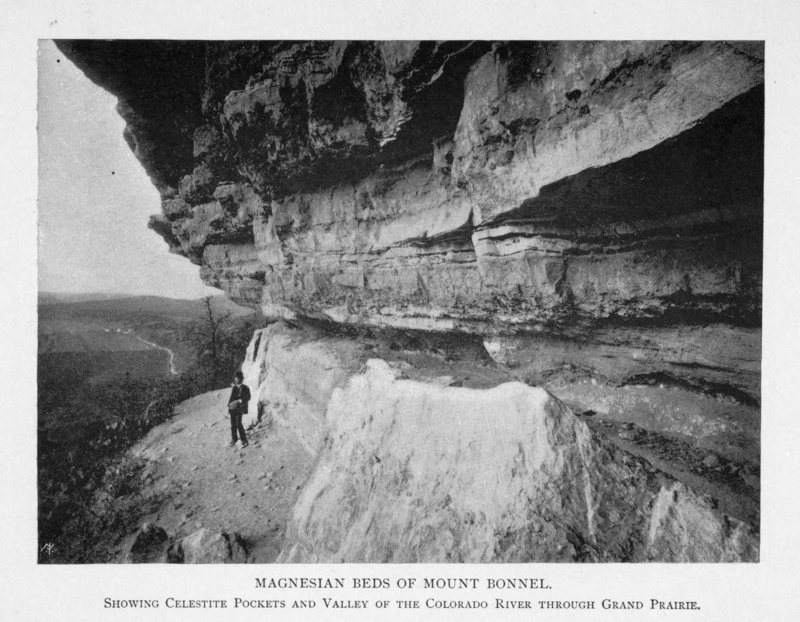
Source: Wikipedia
Our own corner of the world—Lakeway and the greater Hill Country—sits on the Edwards Plateau, a region of rugged beauty and surprising resilience. It’s a place shaped by springs, canyons, and layers of caliche and limestone. Leah recommended a visit to Westcave Preserve to really see how geology, water, and plants interact in this landscape. Those hidden springs and aquifers beneath us are the reason so many native plants here grow long taproots—to reach moisture deep below the surface when our weather swings from flooding rains to scorching drought.
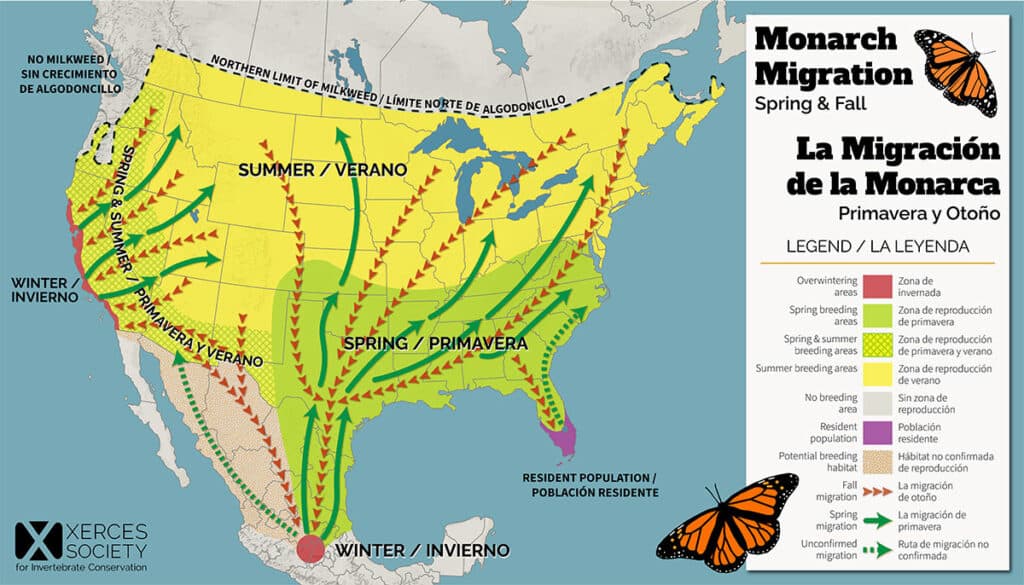
Leah also reminded everyone that we don’t just garden here for ourselves—we garden alongside the rhythms of the Hill Country’s wildlife. Central Texas actually has two prime planting seasons, spring and fall, and both line up beautifully with monarch migrations. In spring, the same monarch butterflies that came from Canada in the fall, stopping here to feast on the bountiful nectar from the fall flowers before flying down to overwinter in Mexico, arrive again in spring to lay their eggs exclusively on milkweed plants and then die. The newly hatched monarchs then fly north.
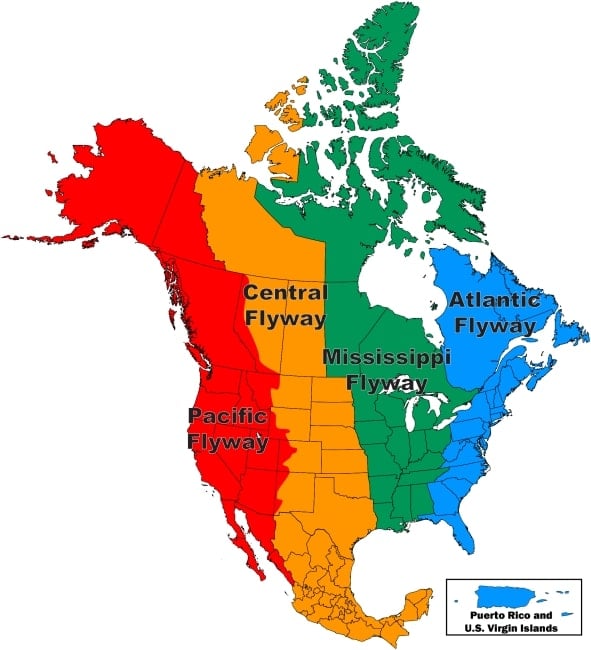
This area is also vital for bird migrations. About 1/3 of all birds migrating in the US pass through here during the spring and fall seasons. Planting native flowers and shrubs that bloom during these migration windows gives them the food and shelter they need along the way.
Image Credit: U.S. Fish & Wildlife Service
Of course, gardening in Central Texas means working with the land, not against it. Our native trees—especially Ashe junipers (yes, the same “cedars” we love to grumble about) and live oaks—do more than frame our views. Their roots help hold what little soil we have in place and their leaves/needles catch rainwater to slow erosion and recharge the aquifers by letting the water percolate into the ground rather than run off. And in spring (not fall!), the live oaks lose their leaves to provide vital mulch before the summer heat blasts in. These leaves and cedar needles then decompose to produce the nutrient-rich black soil that we do have. Beneath it all, caliche, that chalky white rock we hit when we dig too deep, acts like the glue that holds limestone layers together. Add in weather that can’t make up its mind—freeze one week, 90 degrees the next—and it’s no wonder Leah joked that Central Texas gardening keeps you humble.
After painting that picture of our tough yet fascinating environment, Leah turned to resources that make gardening here a little easier. Her handout was full of treasures:
- The Lady Bird Johnson Wildflower Center – a fantastic online plant database that lets you search for native species by soil type, sun exposure, bloom time, and more.
- Native Plant Society of Texas – a welcoming community of native plant enthusiasts, with local chapters, rescue projects, and plant lists tailored to each region.
- City of Austin’s Grow Green Native and Adapted Landscape Plants Guide – a free, easy-to-use booklet full of color photos and care tips for native and adapted plants that thrive in our area. Available at many local nurseries or online.
- Central Texas Gardener website – have a vast array of information to show you all the exciting ways you can garden in Central Texas.
When it comes to actually buying plants, Leah encouraged everyone to skip the big-box stores and head to nurseries that specialize in native species. The Natural Gardener outside Austin (closest one to Lakeway) and Backbone Valley Nursery in Marble Falls are two local favorites with knowledgeable staff who know our soils, pests, and seasonal quirks inside and out.
For seeds, Leah highlighted Native American Seed, a Junction-based company that sources and mixes native wildflower and grass seeds from right here in Texas. For those with veggie gardens, she loves Baker Creek Heirloom Seeds—not only for their huge selection of non-GMO, heirloom vegetables, but also for their beautiful catalogs that double as coffee-table inspiration.
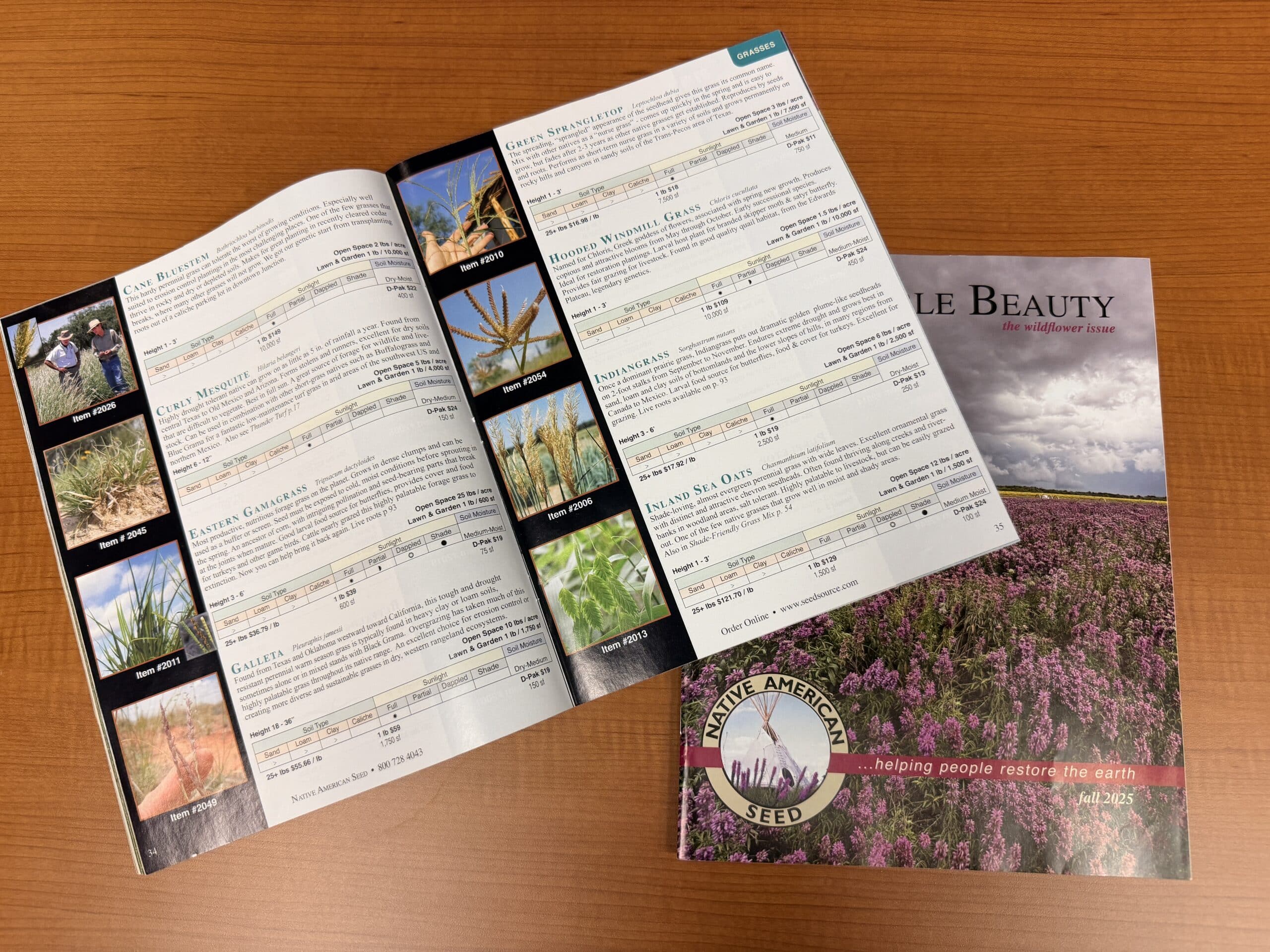


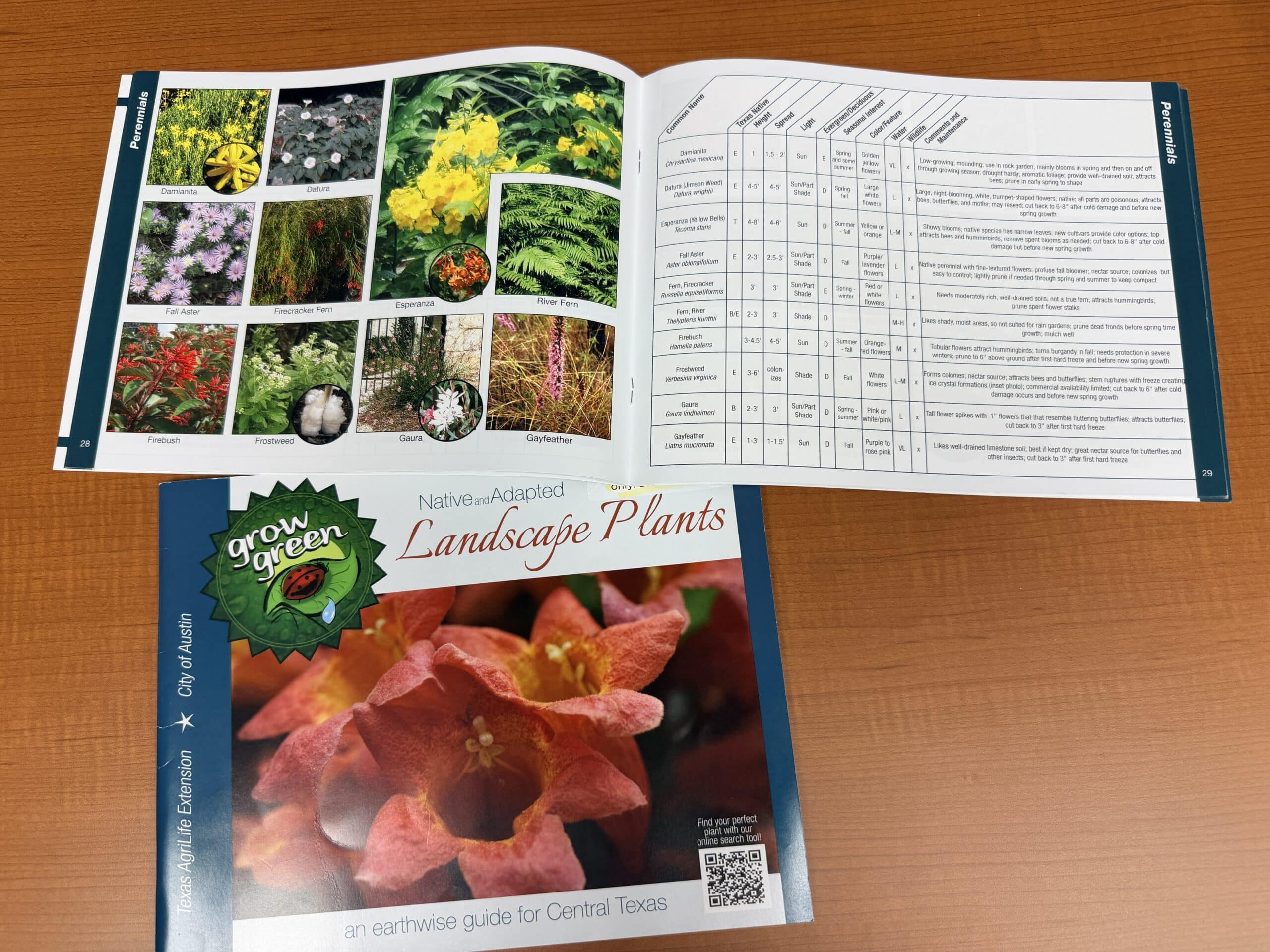
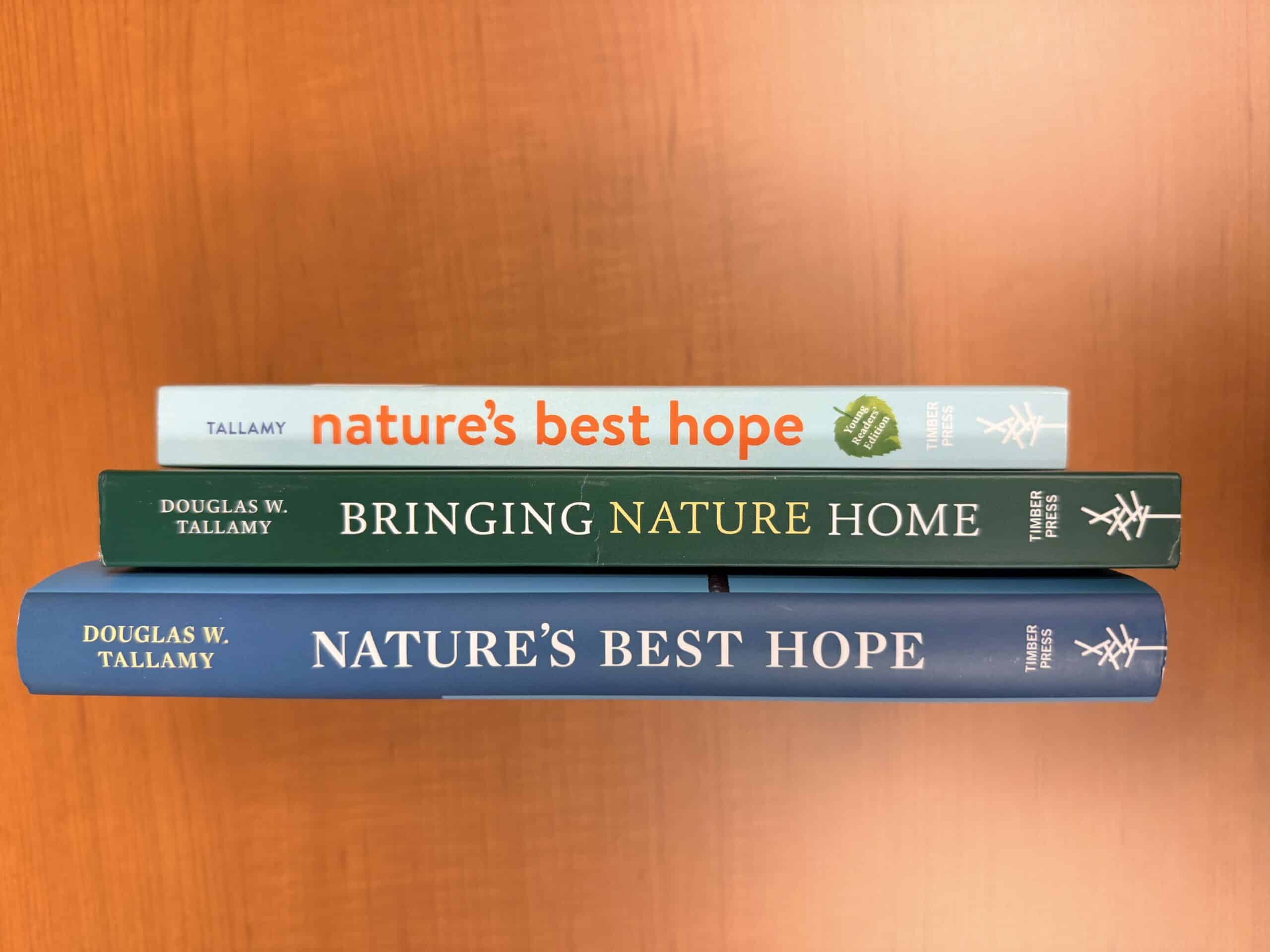

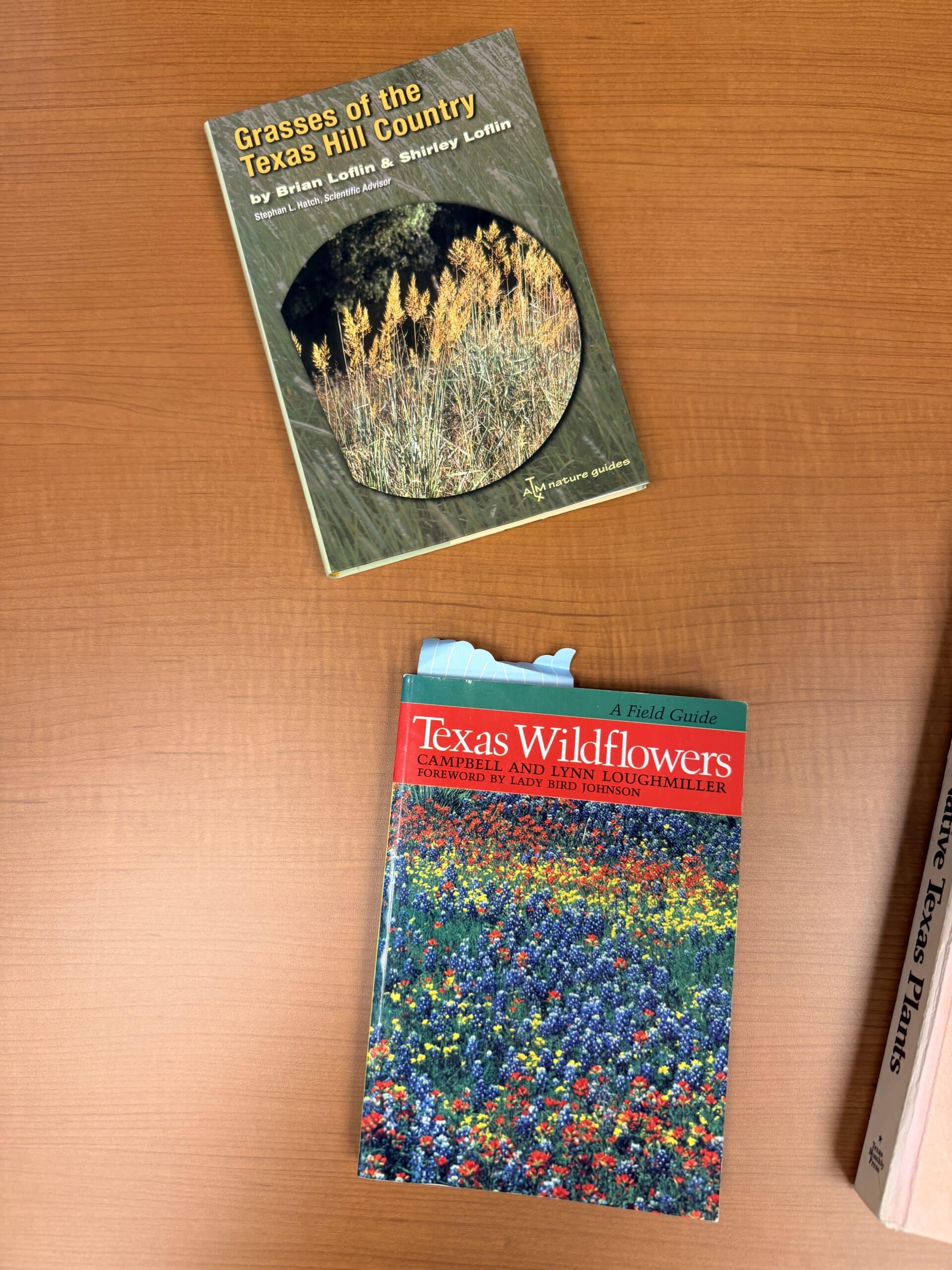
Resources Leah shared at the presentation. Click on image to enlarge. A variety of resources can be found at the Lakeway MUD resource center located at 1097 Lohmans Crossing during regular business hours.
She also shared a few great reads for anyone wanting to dig deeper: A Field Guide to Texas Wildflowers by Campbell and Lynn Loughmiller (a must for wildflower walks) and The Rose Rustlers by Greg Grant and William C. Welch—a delightful adventure into historic Texas roses. And if you ever find yourself near Brenham, don’t miss a trip to the Antique Rose Emporium, where many of those old-fashioned roses still thrive.
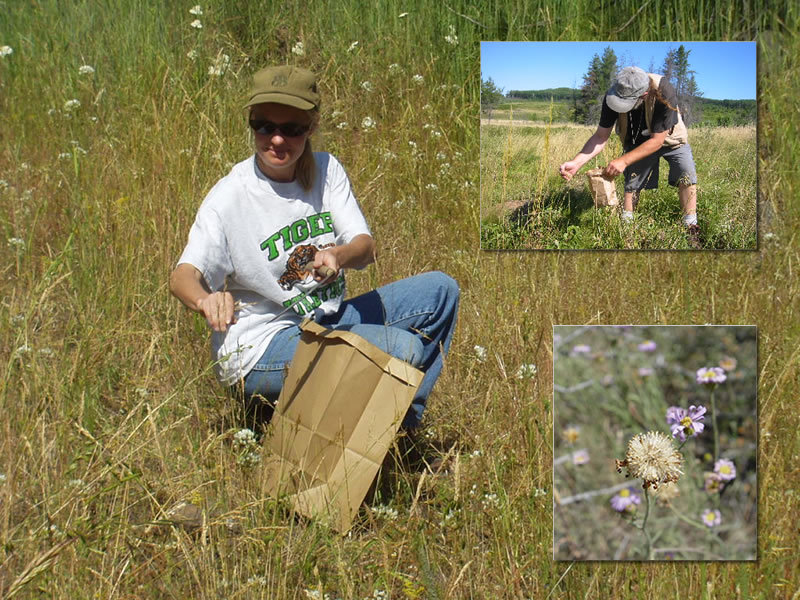
Leah closed her talk with a heartfelt reminder: the choices we make in our own backyards matter. Texas is home to roughly 400 plant species found nowhere else in the world, and about a quarter of those grow only in the Hill Country. As development spreads, those plants—and the wildlife that depend on them—need our help. She highlighted groups like the Native Plant Rescue Project and Central Texas Plant Rescue, whose volunteers work with developers to collect seeds and rescue plants before land is cleared.
By planting more natives—especially the ones that are harder to find—we can help preserve local diversity. Every milkweed for monarchs, every seed-bearing grass for migrating birds, every patch of native groundcover that shelters pollinators adds up. Leah pointed out that species we once saw everywhere, like horned lizards and lightning bugs, have become rare reminders of how fragile those connections are.
Her message was simple but powerful:
When we plant natives, we aren’t just gardening—we’re restoring balance. We’re helping keep Central Texas wild, resilient, and full of life.
Leah Crenwelge
 You are now being redirected to the WaterSmart page.