
LMUD is an Official Distributor of Grow Green
Grow Green is a gardening education program from the City of Austin that promotes sustainable landscaping practices. It addresses water quality & conservation, recycling, encourages using the right plant in the right place, and the least impact-related way to address pest issues.
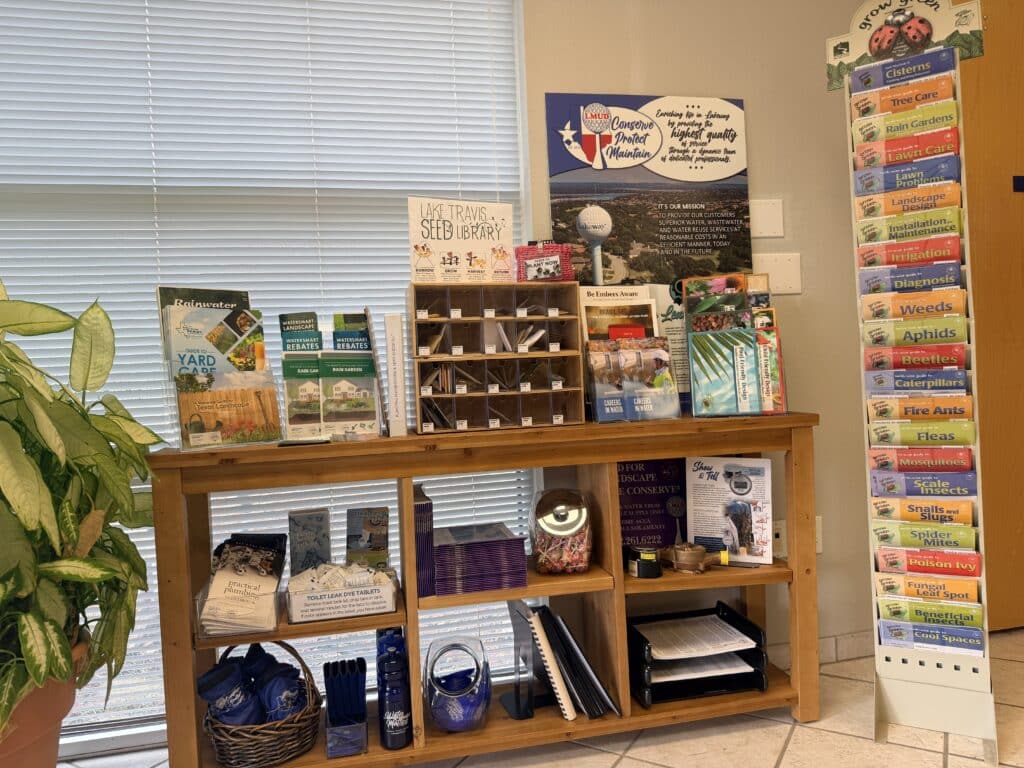
Lakeway MUD became an official distributor of Grow Green in February 2026. As such, residents and visitors of the surrounding area are welcome to visit the Resource Center at our administration office, located at 1097 Lohmans Crosssing, for a free copy of the Grow Green Native & Adapted Plant Guide for Central Texas, Grow Green fact sheets, and Landscape Design Templates (see below for details).
The City of Austin’s Grow Green program promotes sustainable, earth-wise landscaping to protect water quality, conserve water, and reduce chemical use in Central Texas. Key principles include using native/adapted plants, improving soil health with compost, reducing turf areas, utilizing mulch, and practicing Integrated Pest Management (IPM).
Core Earth-Wise Gardening Principles
- Right Plant, Right Place: Select native and adapted plants that are drought-tolerant and resistant to pests, reducing the need for fertilizer and pesticides.
- Soil Health & Mulch: Improve soil structure by adding 2–3 inches of compost or organic matter. Apply mulch to retain moisture, suppress weeds, and regulate soil temperature.
- Water Conservation: Design landscapes with hydrozoning (grouping plants with similar water needs) and use efficient irrigation like drip systems to prevent runoff.
- Integrated Pest Management (IPM): Utilize the least-toxic methods to manage pests, such as manual removal, beneficial insects, and avoiding chemical pesticides.
- Landscape Design: Keep designs simple, limit high-maintenance turf areas, and manage weeds early.
Lakeway MUD carries the following Grow Green informational products:
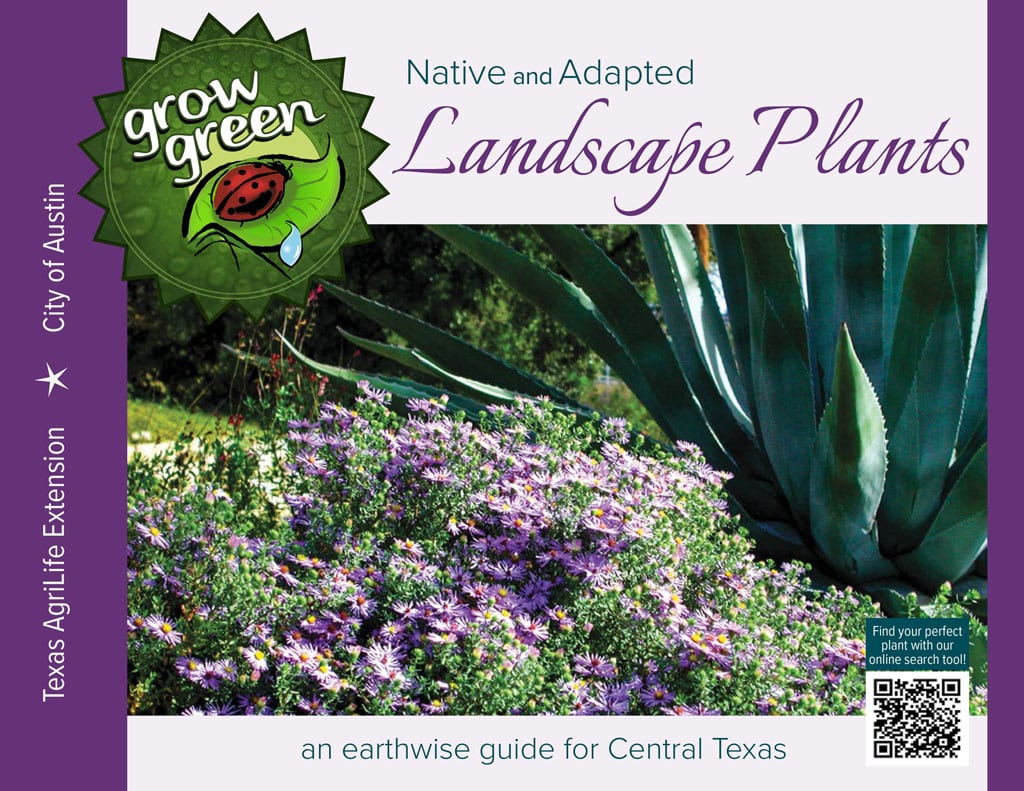
Grow Green Native & Adapted Plant Guide for Central Texas
También disponible en español.
The Native and Adapted Plant Guide for Central Texas is a comprehensive educational resource created by the City of Austin’s Grow Green program to promote sustainable, eco-friendly landscaping. Developed in collaboration with the Texas A&M AgriLife Extension Service, the guide helps residents select plants that thrive in Austin’s unique climate while protecting local water resources.
- Plant Profiles: Each entry typically includes a color photo and details on sun/shade requirements, water needs, mature size, and whether the plant is a Texas native.
- Site-Specific Recommendations: Advice tailored to Central Texas soil types, such as the Blackland Prairie clay (East Austin) versus the thin Edwards Plateau caliche soil (West Austin – *includes Lakeway*).
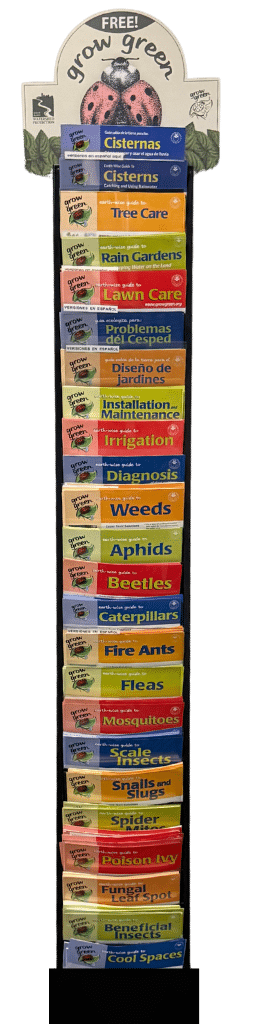
Grow Green Fact Sheets
También disponible en español.
More than 95% of insects aren’t pests. some pollinate
our flowers and vegetables, while many others feed on
pests in our gardens. By allowing them to do their
job, we can reduce the need for pesticides and maintain
water quality.
Cisterns are containers that hold rainwater collected from hard surfaces, most often from roofs. Cisterns come in a wide range of styles and sizes. (Note: A rain barrel is a well-known type of small cistern. This guide provides guidance on large cisterns.)
Taking steps to reduce urban heat fits within the principles of climate adaptation, a prudent planning practice being employed by cities around the world. This guide will help you understand the benefits of installing trees & plants, a green roof & walls, light-colored, permeable pavement, and shade structures.
Correct diagnosis is essential in managing plant problems. Plants may be affected by how they are installed and maintained (cultural problems),
insect pests, diseases, their environment, or a combination of the above.
This fact sheet is a guide to help you choose a
professional who practices earth-wise principles. Note: the State of Texas requires licenses for pest and weed control and irrigation systems installation. The State of Texas does not require licenses for mowing and yard care or tree pruning.
It is possible to have an attractive, healthy, low maintenance landscape that is also sustainable. The amount and frequency of care largely depends on utilizing earth-wise principles throughout the entire project. Proper preparation and installation greatly reduce many common landscape maintenance problems while also helping conserve resources and reduce water pollution.
Although an automatic sprinkler system may seem easier than dragging water hoses around the yard, you should spend some time evaluating your needs and learning about your options. Note: Lakeway residents are not eligible for the mentioned City of Austin rebates, however they are eligible for similar rebates from LCRA.
Green Gardens come in many styles. They range from cottage gardens full of color, to soothing Zen gardens, to hot cactus rock gardens. Each of these styles can be created using a plant palette tailored to the unique conditions of the Central Texas area, and more specifically, to the conditions in your own yard. The purpose of this fact sheet is to provide background information on creating a green garden for either the do-it-yourselfer of for those working with a landscape professional.
A dense, healthy lawn with deep roots improves the
lawn’s ability to absorb water, reduce runoff and
out-compete weeds. This fact sheet includes tips for starting a new lawn, weeding, grass options, mowing, irrigation, aerating, and fertilizing.
The Grow Green program recommends the least toxic approach to pest management and responsible
fertilizer use in order to reduce the amount of landscape chemicals that runoff into our waterways and degrade water quality. This fact sheet includes a product toxicity comparisons of some of the most readily available insecticides, herbicides, and fungicides.
A rain garden is a shallow, vegetated depression designed to absorb and filter runoff from hard
(impervious) surfaces like roofs, sidewalks, and driveways. Rain gardens are usually planted with
colorful native plants and grasses. They not only provide an attractive addition to the yard, but also help
to conserve water and protect our water quality.
Urban trees need our help. To prepare for expected meteorological changes we need to evaluate the health of existing trees, care for them, and make informed decisions to replenish our urban forest.
Pests
Aphids are a tiny (1/16-1/8″) insect with soft body, long legs and antennae; cornicles or
“tailpipes” on tip of abdomen; 250 species; reproduce quickly; attack new growth or the underside of a leaf. The fact sheet includes a list of product toxicity comparisons to encourage the LEAST TOXIC approach to pesticide use.
There are many types of beetles in the Austin area, many of them are beneficial. The two most common groups of pest beetles in the Austin area are Flea Beetles (attack many vegetables including cucumbers, tomatoes, peppers and eggplant, potatoes) and Cucumber Beetles (attack all members of the squash and cucumber family). The fact sheet includes a list of product toxicity comparisons to encourage the LEAST TOXIC approach to pesticide use.
Caterpillars can be found year round, but are most prevalent in spring and fall; some types are specific to a season while others complete more than one life cycle per year. Types of pest caterpillars found in the Austin area include Tomato Horn Worm, Tent Caterpillar, Genista, and Spring Cankerworm. The fact sheet includes a list of product toxicity comparisons to encourage the LEAST TOXIC approach to pesticide use.
Fire ant colonies contain the queen(s), winged males and females, workers (wingless,
sterile females) and brood (eggs, larvae and pupae). They create mounds up to 18″ tall. Fire ants can be a problem year round, but are most prevalent in the spring and fall.
Fire ants don’t injure turfgrass, but mounds become unsightly; ants are aggressive and cause painful stings that may become infected. They can invade electrical equipment and cause short circuits. The fact sheet includes a list of product toxicity comparisons to encourage the LEAST TOXIC approach to pesticide use.
Fleas are tiny insects with hind legs modified for jumping; adults are found on pets; eggs, larvae and pupae are found in carpet and in shady, moist soil in the yard; they leave black droppings around pet sleeping areas and jump when disturbed. An effective program to eliminate fleas must include controlling fleas on pets, and removing eggs and larva from the living area. The fact sheet includes a list of product toxicity comparisons to encourage the LEAST TOXIC approach to pesticide use.
Many species of garden and landscape plants can be affected by Fungal Leaf Spot: leaves turn yellow, then brown and drop from plant; sometimes leaves drop before turning brown; spreads easily on wet foliage. Look for a raised center on a spot caused by fungus. The fact sheet includes a list of product toxicity comparisons to encourage the LEAST TOXIC approach to fungicide use. Note that not all leaf problems are caused by fungus. Fungicides are ineffective for drought-stress, chemical damage, bacterial or viral spots or insect damage.
Lawn problems included in this fact sheet include: Chinch bugs, Grubs, Brown Patch, Take All Patch, Drought Stress, Iron Chlorosis, and Shade Stress. It also includes a flow chart to identify what may be damaging your lawn and a list of product toxicity comparisons to encourage the LEAST TOXIC approach to pesticide and fungicide use.
Mosquitoes are small (~1/4 inch) flies that play an important role in food webs, but can become a nuisance when abundant, and in worst cases spread disease such as West Nile Virus. Only females bite because the extra protein and iron is necessary to produce the eggs. Reducing mosquito populations is best approached before they become adults. Awareness of how to how to limit breeding sites can drastically reduce their numbers
around our homes without harming other living things. The fact sheet includes a list least toxic mosquitoes pesticide products.
Poison Ivy consistently has three leaflets with smooth, wavy or serrated edges; leaflets are alternate on the stem; clusters of whitish flowers and fruit are not showy. It’s a persistent deciduous perennial; young plants can be 1’-2’ tall and are herbaceous; mature plants can be woody and cover hundreds of square feet; can grow to be vine-like, shrubby or a groundcover; vine attaches to any object that will support it; spreads by rhizomes and seeds. Oily resin can cause severe itching, skin inflammation and blisters; oil can bond on to the skin within 20 minutes of exposure and stay active on some surfaces for up to five years; allergic reaction may take as little as four hours or up to 10 days; three out of four people will have some type of reaction within 24-72 hours. IF EYES SWELL SHUT, SEE A DOCTOR IMMEDIATELY. The fact sheet includes a list of product toxicity comparisons to encourage the LEAST TOXIC approach to herbicide use.
Powdery Mildew is a white powdery fungal growth on the leaf surface; does not require moist leaves to spread, but is particularly active in the spring and fall during cool, humid conditions. Spreads rapidly and can produce spores within 72 hours of infection. It seldom causes permanent damage to plants. The fact sheet includes a list of product toxicity comparisons to encourage the LEAST TOXIC approach to fungicide use.
Scale are very small, sucking insects found on leaves, twigs, stems and sometimes fruits; often mistaken for part of plant since they look like natural bumps and do not move when mature; sometimes mistaken for fungal growth. Scale excrete “honeydew,” a sticky substance that attracts ants and often causes black “sooty mold”. The fact sheet includes a list of product toxicity comparisons to encourage the LEAST TOXIC approach to pesticide use.
Snails and slugs feed on plants by scraping off the tissue or eating holes in the leaves or flowers; leave glistening trails of slime wherever they crawl. They are attracted to moist places. Treat for snails and slugs only if significant plant damage begins to appear. The fact sheet includes a list of product toxicity comparisons to encourage the LEAST TOXIC approach to pesticide use.
Adult Spider Mites are tiny (1/150-1/50”); varied in color; spider-like, with eight legs and no antennae; eggs are laid on the underside of leaves and on buds. They affect fruit trees, many house plants, tomatoes, Marigolds, strawberries, Buddleia, roses, Junipers, and Rosemary. They cause leaves to lose color as numerous yellow specks appear and often
turn bronze and curl under. The fact sheet includes a list of product toxicity comparisons to encourage the LEAST TOXIC approach to pesticide use.
Brown Stink Bugs, Southern Green Stink Bug, and Leaf-footed bugs all emit a distinct odor when handled. They any fruits and vegetables, and are especially fond of Tomatoes, Southern Peas, Peaches, and Pecans causing damage by sucking juices from leaves, stems and fruits, causing deformed growth. The fact sheet includes a list of product toxicity comparisons to encourage the LEAST TOXIC approach to pesticide use.
A weed is a plant that is growing where it is not wanted; it easily reproduces and spreads; competes with desirable plants for space, light and nutrition; detracts from the aesthetics of the landscape; can harbor pests and diseases. The goal is to disrupt the weed’s life cycle without damaging the environment. Examples of perennial weeds include Broadleaf Plaintain, Bermudagrass, Dandelion, and Quackgrass. Examples of annual weeds include Carpetweed, Chickweed, Sandbur, and Purslane. The fact sheet includes a list of product toxicity comparisons to encourage the LEAST TOXIC approach to herbicide use.
Landscape Design Templates
Landscaping to protect and conserve Austin’s (and the surround area’s) water

Child Friendly Design
LIGHT: Sun/part shade
Encourage a child to enjoy the outdoors by planting a sensory garden. Just add some fuzzy Lamb’s Ear or Spineless Cactus to touch, herbs to smell and excite the taste buds, Inland Sea Oats to rustle in the wind, and some unique shaped-flowers like Shrimp Plant and Batface Cuphea to see and appreciate. This is one of the few designs that calls for a substantial amount of grass so there is open space to run and play.
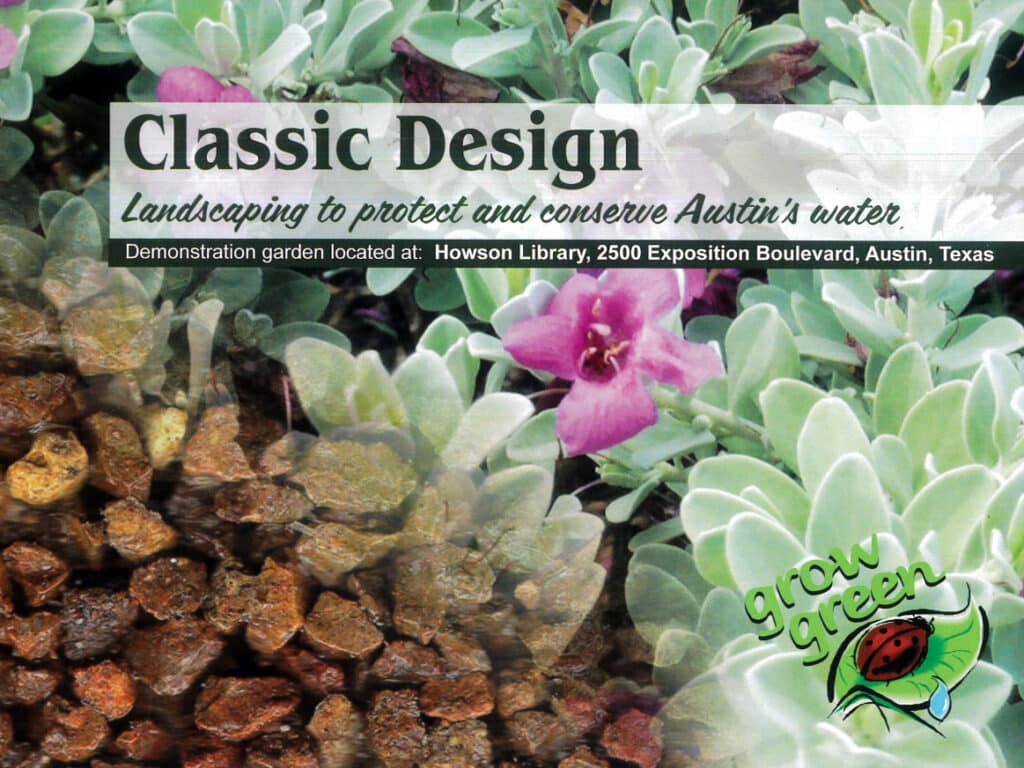
Classic Design
DEMONSTRATION GARDEN:
Howson Library, 2500 Exposition Blvd., Austin, Texas
LIGHT:
South side: Sun (left or south side)
North side: Shade (right or north side)
In 2004 the Howson Library landscape featured St. Augustine turf and just a few plants. The redesigned “green” landscape shows that a yard can be attractive and water conserving while still maintaining the feel of
a traditional garden. The rainwater harvesting system which was added in 2009 is expected to provide an even greater reduction in water use.

Contemporary Design
DEMONSTRATION GARDEN:
City Hall, 301 West 2nd St., Austin Texas
LIGHT: Full Sun
What better place for a Hill Country garden
than Austin’s City Hall? The sunny western
exposure allows for the most drought tolerant
native and adapted plants. Limestone planters sitting on top of the underground parking
garage create a green roof.
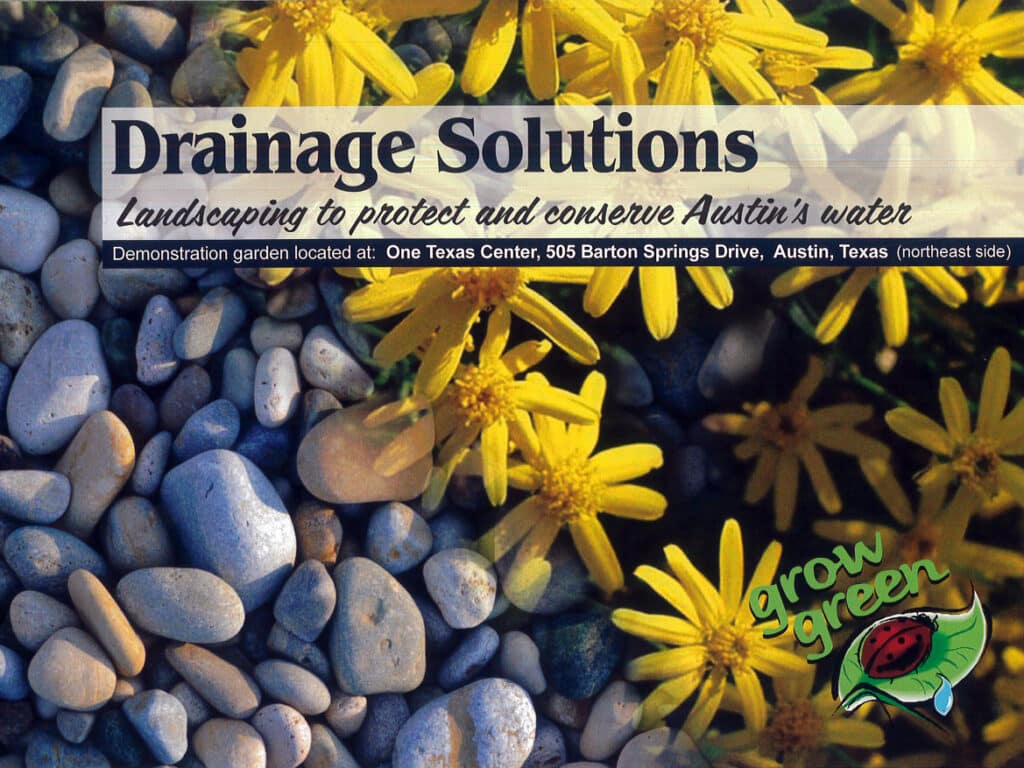
Drainage Solutions
DEMONSTRATION GARDEN:
One Texas Center, 505 Barton Springs Dr., Austin, Texas (northeast side)
LIGHT: Sun/part shade
Do you have drainage problems in your yard? Perhaps flooding is a concern or you simply want to better manage the runoff that flows through your property. An effective and attractive solution is to add a swale or “dry creekbed” in the area.

Low Maintenance Shade
DEMONSTRATION GARDEN:
Zilker Botanical Garden (Green Garden), 2220 Barton Springs Rd., Austin, TX
LIGHT: Shade
The large tree canopy sets the mood and style
for this shade-loving landscape. Featuring native dwarf yaupons and a variety of liriopes, this design is low maintenance. The soothing evergreens provide a perfect place to escape the heat and enjoy the tranquility of a summer day in Texas.

Pool Friendly Design
LIGHT: Sun/part shade
This inviting landscape design has the feel of the tropics while still making use of Austin’s drought tolerant plants to conserve water and reduce the need for chemicals. The many evergreens provide interest year-round while perennials flowers add splashes of color during the pool and growing season.
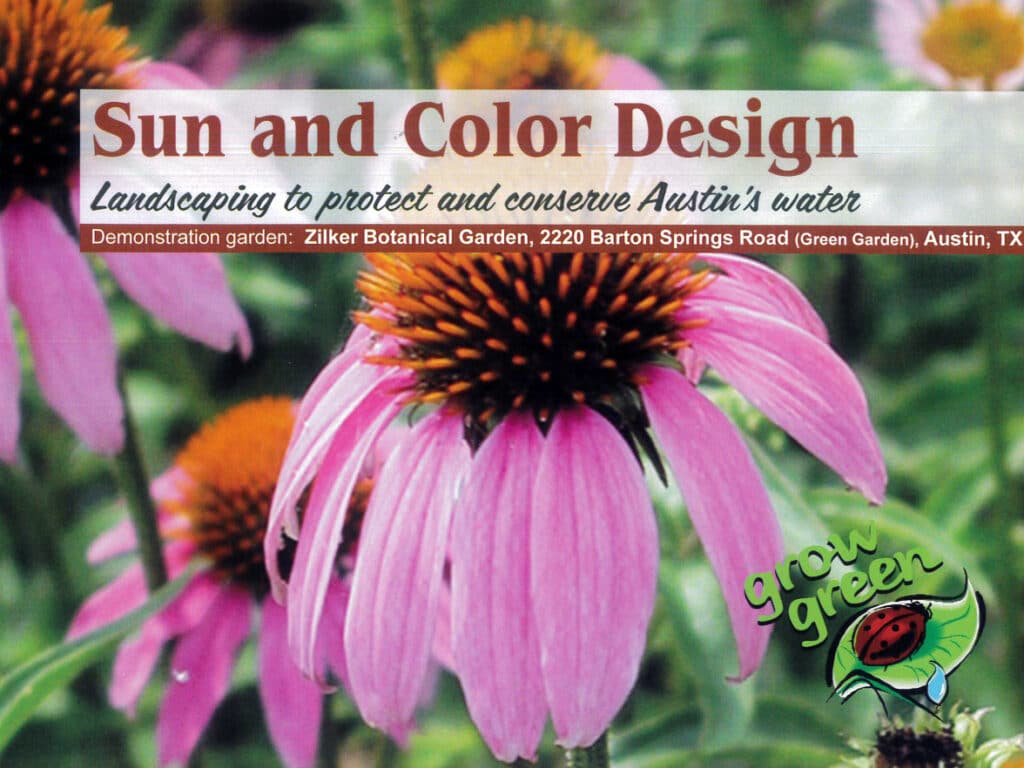
Sun and Color Design
DEMONSTRATION GARDEN:
Zilker Botanical Garden, 2220 Barton Springs Rd. (Green Garden), Austin, TX
LIGHT: Sun
This west-facing garden allows for vibrant color throughout the growing season while the evergreen cactus and yucca provide year-round structure and interest. It features some of Austin’s most versatile and showy native plants.
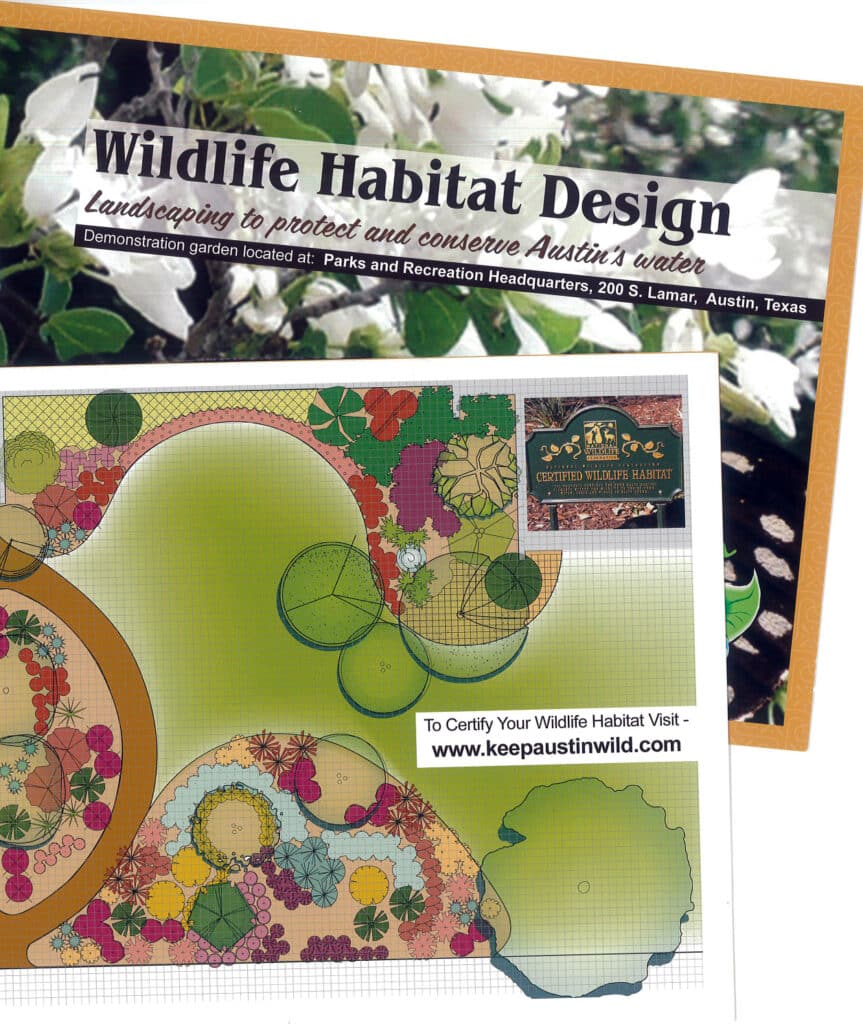
Wildlife Habitat Design
DEMONSTRATION GARDEN:
Parks and Recreation Headquarters, 200 S. Lamar, Austin, Texas
LIGHT: Sun/ Part Shade
Native plants are the best choice for habitat gardens because they offer the best natural food sources for our local wildlife. Beautiful
songbirds, hummingbirds, and butterflies are regular visitors when you provide them with food, water, cover and places to raise their young.
 You are now being redirected to the WaterSmart page.