
Earth Day Is Every Day: Stewardship Starts with Us
As published in the Lake Travis View, Austin American Statesman, April 2026
The story of Earth Day begins long before it became a date on the calendar.
In the decades leading up to the first Earth Day in 1970, Americans were witnessing visible changes in the environment around them: rivers were polluted, air quality was declining in major cities, and communities were beginning to feel the effects of rapid industrial growth without the safeguards we often take for granted today. These weren’t distant or abstract concerns—they were local, personal, and increasingly hard to ignore.
Motivated by those realities, U.S. Senator Gaylord Nelson helped launch a nationwide effort to bring environmental awareness into everyday conversation. On that first Earth Day, an estimated 20 million Americans—about 10 percent of the U.S. population at the time—participated in events across the country. It remains one of the largest civic demonstrations in history.
What followed was not driven by a single group or viewpoint, but by a shared recognition that the environment is something we all depend on. By the end of that same year, the momentum contributed to the creation of the Environmental Protection Agency, along with landmark legislation including the National Environmental Education Act, the Occupational Safety and Health Act, and the Clean Air Act. Two years later, Congress passed the Clean Water Act—establishing protections that still help safeguard the water we rely on today.
More than 50 years later, Earth Day has grown into a global observance, with participation in more than 190 countries. Its focus has expanded to include a wide range of environmental concerns—from water conservation and air quality to habitat preservation and waste reduction. But at its core, the message has remained consistent: caring for our environment starts with awareness and shared responsibility.
Here in the Texas Hill Country, that message is especially relevant when it comes to water.
Water is one of our most limited and essential resources. In Central Texas, much of our water supply depends on rainfall, aquifers, and lakes that can fluctuate significantly with changing weather patterns. According to the U.S. Geological Survey, the average American uses about 82 gallons of water per day at home. In Texas, outdoor water use—primarily for landscaping—can account for 30 to 60 percent of household consumption, depending on the season.
Those numbers aren’t meant to alarm, they’re meant to inform. They remind us that small, everyday choices add up. Adjusting irrigation schedules, fixing leaks, and paying attention to how water is used around the home can make a meaningful difference over time.
And while water may be our local focus, it is closely connected to broader environmental concerns. The way we manage landscapes affects runoff and water quality. The plants we choose influence pollinators and wildlife. The energy we use to treat and transport water connects to larger systems that extend far beyond our community.
These connections can sometimes feel distant or overwhelming. But, that’s where local efforts make a difference—by bringing those big ideas closer to home.
In the days leading up to this year’s Earth Day, Lakeway MUD hosted two events designed to do just that.
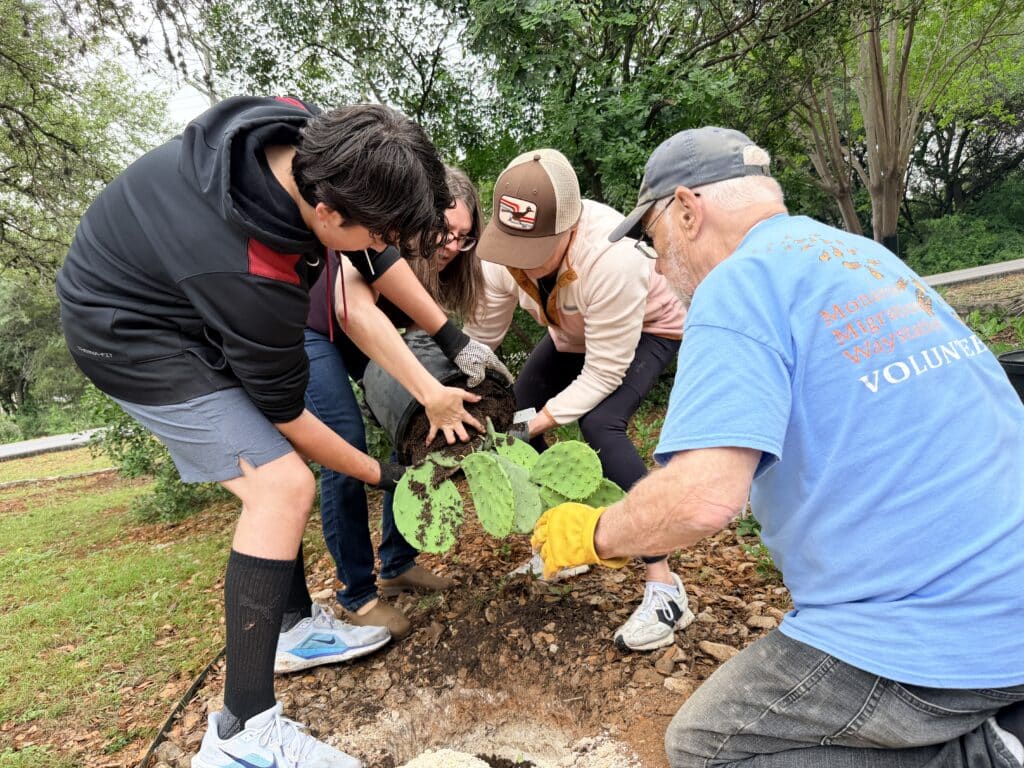
At the Lakeway MUD Demonstration Garden, volunteers gathered for a spring planting event that turned awareness into action. The morning was filled with the steady rhythm of work—hands in the soil, neighbors sharing tools, conversations unfolding between people who might not otherwise have met. Students worked alongside experienced gardeners, learning not just how to plant, but why it matters.
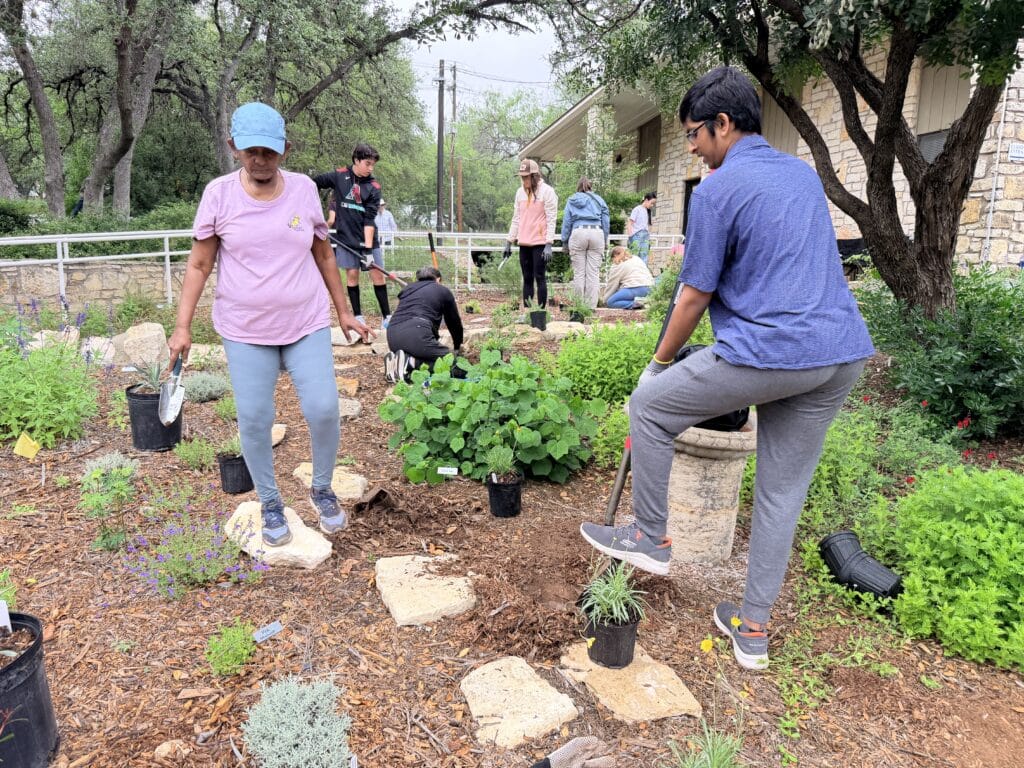
There was a sense of quiet purpose in the work. Weeding, pruning, and planting may seem like small tasks, but together they contribute to something larger: a shared space that reflects thoughtful water use and care for the local environment.
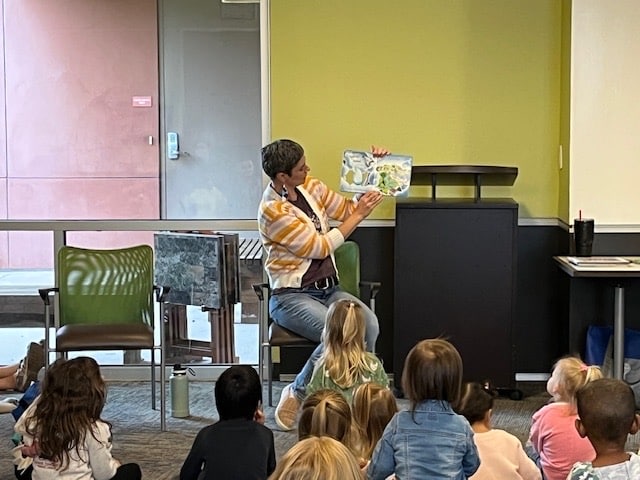
Lakeway MUD also participated in a special Earth Day preschool story time at the local library.
There, the audience was younger, but no less important. Children listened as stories brought the natural world to life: a tiny seed growing into a flower, a raindrop traveling from the sky to the ground and back again. These simple narratives introduced the idea that nature is made up of cycles, and that we are part of them.
These moments—whether in a garden or a library—help make Earth Day personal. They take concepts that can feel large and distant and connect them to daily life.
Because in the end, stewardship isn’t about a single day or a single action. It’s about awareness.
It’s noticing how long the sprinkler runs.
It’s recognizing when water is being wasted—and choosing to adjust.
It’s taking the time to learn, and to share that knowledge with others.
It’s understanding that the choices we make today shape the world we leave for the next generation.
Earth Day continues to be a powerful reminder of what’s possible when people come together. But its lasting impact is found in what happens afterward—in the small, consistent actions taken by individuals, families, and communities.
There’s no single way to “do it right,” and no expectation of perfection. What matters is participation. Awareness. A willingness to take small steps that, over time, create meaningful change.
LAKEWAY MUD
There’s no single way to “do it right,” and no expectation of perfection. What matters is participation. Awareness. A willingness to take small steps that, over time, create meaningful change.
In the Texas Hill Country, where water is both precious and finite, that awareness is especially important.
Earth Day may be celebrated once a year, but its message is something we carry forward—every time we turn on a tap, step into our yard, or choose to do a little more with a little less.
Because caring for our environment isn’t about looking back at what could have been done differently. It’s about recognizing what we can do now—and choosing to be part of the solution, one day at a time.
Stephanie Threinen is the public information liaison for the Lakeway Municipal Utility District. Earl Foster is the general manager of LMUD.
 You are now being redirected to the WaterSmart page.