
Beyond the Lawn: Smarter Ground Cover Choices for Central Texas
Presenter: Gay Bonorden Gray, Best Tex Gardens
LMUD Monthly Garden Club presentation, March 9, 2026
About the Presenter
Gay Bonorden Gray is the founder of Best Tex Gardens, a landscape design company focused on sustainable and climate-appropriate landscaping for Central Texas. After a successful career as an intellectual property litigator and in-house counsel for a Fortune 500 company, Gay returned to school to pursue horticulture and began designing landscapes in 2000. Her work has appeared in Sunset Magazine publications and on HGTV’s Landscape Smart, where she filmed two episodes highlighting environmentally responsible landscaping techniques. Today she manages the family landscape business, teaches landscape design classes, and speaks to community groups about creating earth-wise landscapes that thrive in the challenging Central Texas environment.
Video: Case Studies
Below is a video of the case study portion, featuring some of Gay’s projects and photos; it was held at the end of the Beyond the Lawn: Ground Cover Options presentation. A summary of the presentation can be found after this video.
Rethinking the Traditional Lawn
Doug Tallamy, an ecologist and author, is a primary proponent of the idea that we would be happier if we expected less from our lawns, advocating for smaller lawns to boost biodiversity and reduce environmental impact. He promotes replacing traditional, high-maintenance turf with native plantings to create more ecological, sustainable, and lower-stress landscapes.
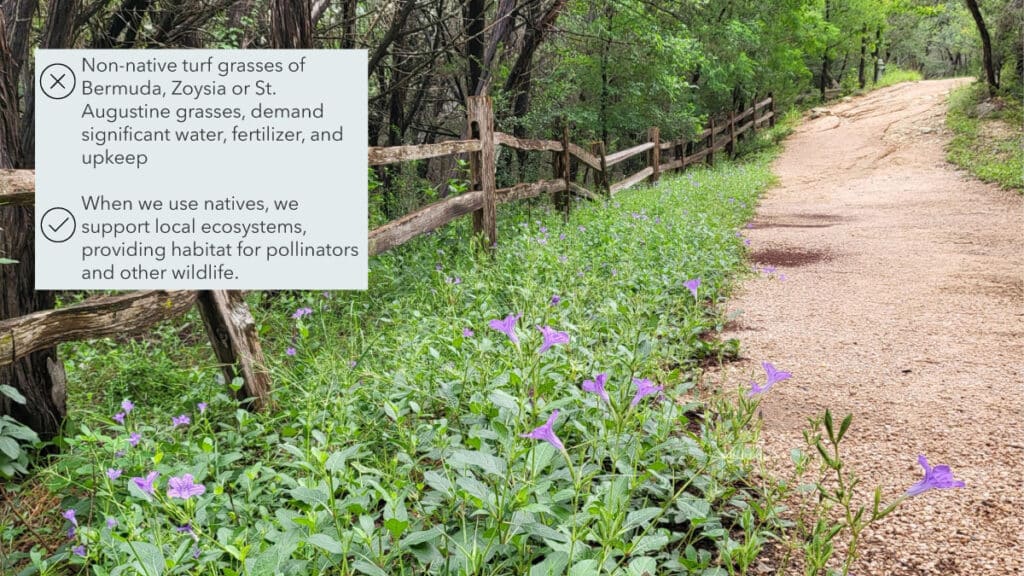
Most Central Texas lawns are built to fight against the natural environment, covered by an expanse of non-native turf grass, which typically requires frequent irrigation, fertilizer, and maintenance. Landscape programs, such as the City of Austin’s Grow Green initiative and the Lower Colorado River Authority’s (LCRA) WaterSmart Rebates, encourage homeowners to reduce turf areas and replace them with native or adaptive plants that are better suited to local conditions.
Common turf grasses used in Central Texas include:
- Bermuda grass
- A warm-season grass commonly used in sunny landscapes.
- Tolerates heat, but requires frequent mowing and can spread aggressively into planting beds.
- St. Augustine grass
- Performs best in shady areas where other grasses struggle.
- Requires significant watering and is susceptible to disease and pests.
- Zoysia grass
- A dense turf that creates a soft, uniform lawn.
- More drought tolerant than some turf types, but still requires irrigation and maintenance.
- If you choose a non-native for hearty ground cover in a functional part of your lawn, try Palisades Zoysia: a medium-to-coarse textured, dense, and hardy turfgrass ideal for high-traffic residential lawns, known for superior drought tolerance and better shade performance than many varieties, needing only 3 to 4 hours of sun or dappled most of the day in our Central Texas climate. It requires less water and mowing than St. Augustine, while offering a softer, more luxurious feel than Bermuda.
Creating a More Sustainable Landscape
Replacing portions of traditional lawns with native or adapted plants can create landscapes that are both attractive and environmentally responsible.
Benefits include:
- Reduced water use
- Lower maintenance costs
- Healthier soils and ecosystems
- Increased habitat for birds, butterflies, and beneficial insects
Native landscaping also supports biodiversity by providing food and shelter for pollinators and wildlife that evolved alongside these plants. By embracing the diversity of Central Texas plants, homeowners can create landscapes that are beautiful, resilient, and well suited to the region’s unique environment.
What Is Ground Cover?
Ground cover refers to anything used to cover bare soil in a landscape. This may include living plants or materials such as mulch or stone.
Ground cover serves several important purposes:
- Protects soil from erosion caused by rain and wind
- Helps retain soil moisture by reducing evaporation
- Suppresses weed growth
- Improves the appearance and structure of landscapes
- Improves habitat for pollinators
Common types of ground cover include:
- Turfgrass lawns
- Native grasses and low-growing plants
- Adapted ground cover plants
- Wildflower plantings
- Organic mulch (wood chips, leaves, compost)
- Rock or gravel
- Artificial turf
The best choices often depend on sun exposure, soil conditions, maintenance preferences, environmental or aesthetic goals, as well as drainage and irrigation/water use.
Native Plant Ground Covers
Native plants are species that evolved naturally in their local ecosystems. Because they are adapted to the region’s soils, rainfall patterns, and temperatures, they often perform better than non-native plants in local landscapes.
Organizations such as the Native Plant Society of Texas promote the use of native plants because they conserve water, support wildlife, and require less maintenance than traditional landscaping plants.
Benefits of native ground covers include:
- Require significantly less irrigation once established
- Support pollinators such as bees, butterflies, and hummingbirds
- Reduce the need for fertilizers and pesticides
- Improve soil health and biodiversity
- Provides unique beauty
Research and demonstration gardens, such as those at the Lady Bird Johnson Wildflower Center, show that native landscapes can use 50–75% less water than traditional lawns while remaining visually appealing.
Low-Growing Native Lawn Alternatives
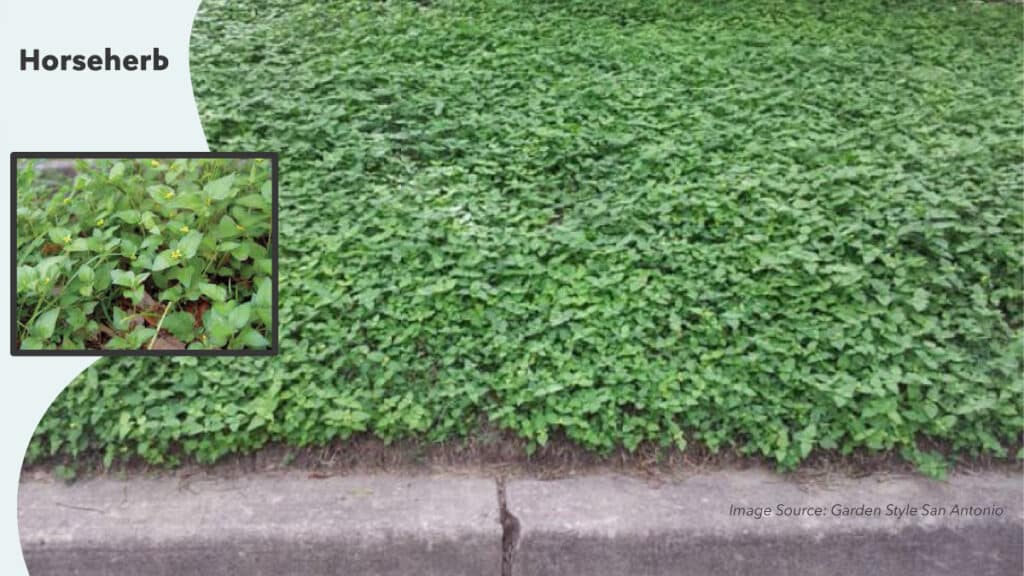
Horseherb (Calyptocarpus vialis)
- A hardy Central Texas native often already present in local landscapes.
- Thrives in shady areas, especially beneath large oak trees.
- Forms a low mat that suppresses weeds and creates a soft green ground layer.
- Requires minimal watering once established.
- Can be mowed occasionally or allowed to grow naturally.
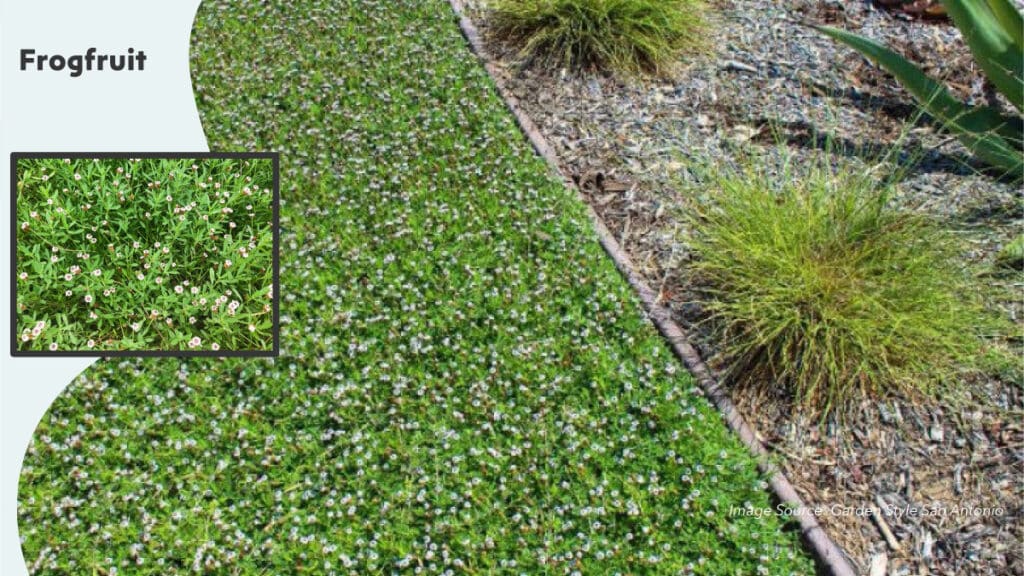
Frogfruit (Phyla nodiflora)
- Extremely drought tolerant and thrives in sunny areas.
- Produces small flowers that attract pollinators and butterflies.
- Spreads naturally to form a dense ground cover.
- Useful for stabilizing soil and preventing erosion.
Native Grasses for a Natural Landscape
Native grasses evolved in Texas prairies and grasslands, making them especially resilient to the region’s climate.
According to native plant organizations and conservation programs, native grasses often require less irrigation and fertilizer than non-native turf grasses because of their deep root systems and natural adaptation to local conditions.
Common Native Grass Lawn Options
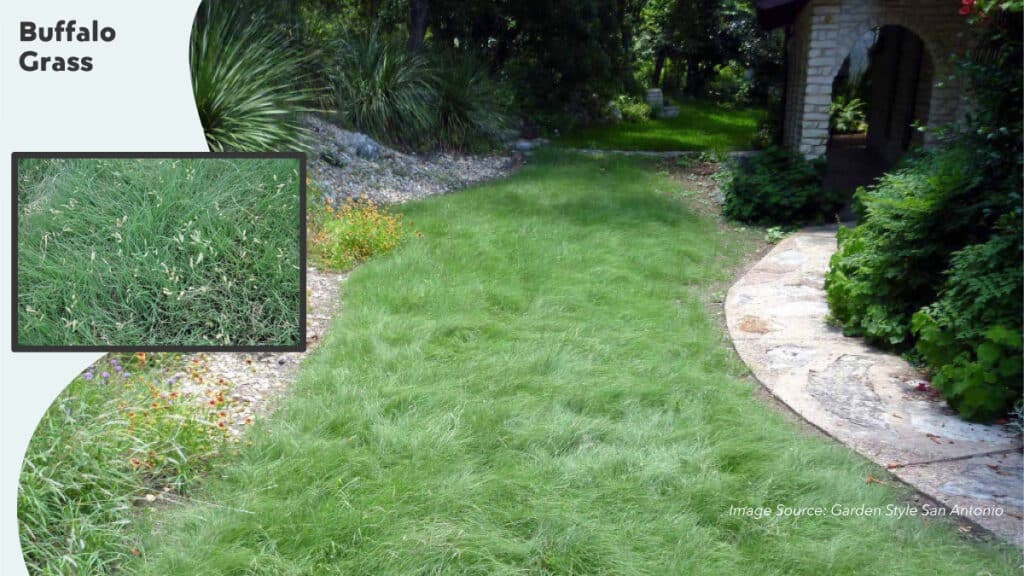
Buffalo Grass (Bouteloua dactyloides)
- A true Texas native that forms a soft, blue-green turf.
- Requires minimal irrigation and mowing.
- Can create a lawn-like surface with far lower maintenance.
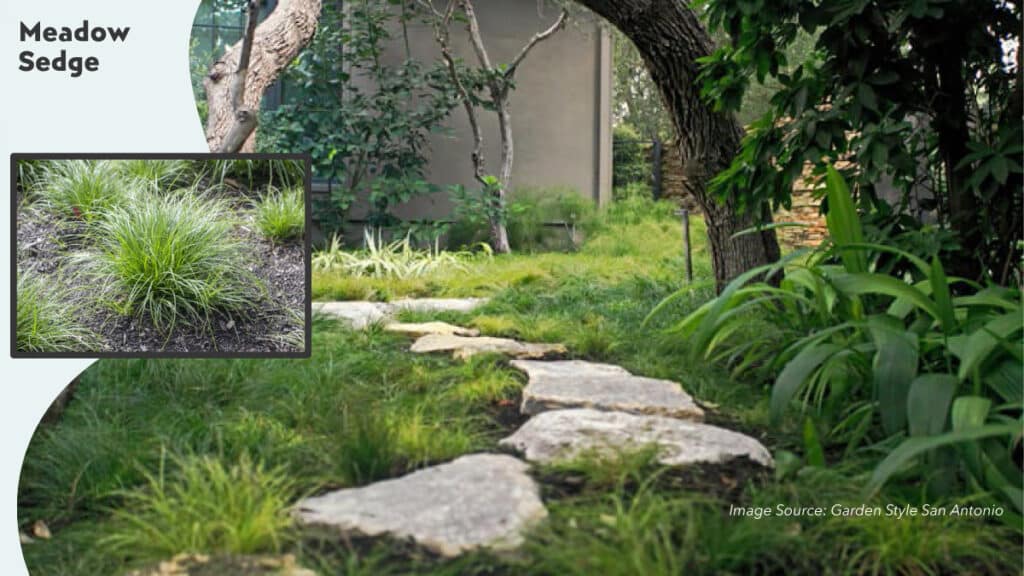
Meadow Sedge (Carex perdentata) or Texas Sedge (Carex texensis)
- Texas sedge is shorter, usually 4–10 inches, making it better for a “no-mow” lawn.
- Meadow sedge can grow up to 3 feet tall, though it can be maintained shorter.
- A native sedge that resembles ornamental grass.
- Performs well in shaded areas under trees.
- Creates a natural meadow-like appearance or can be planted in rows for a more structured design.
- Suitable for low-traffic areas and requires little to no maintenance.
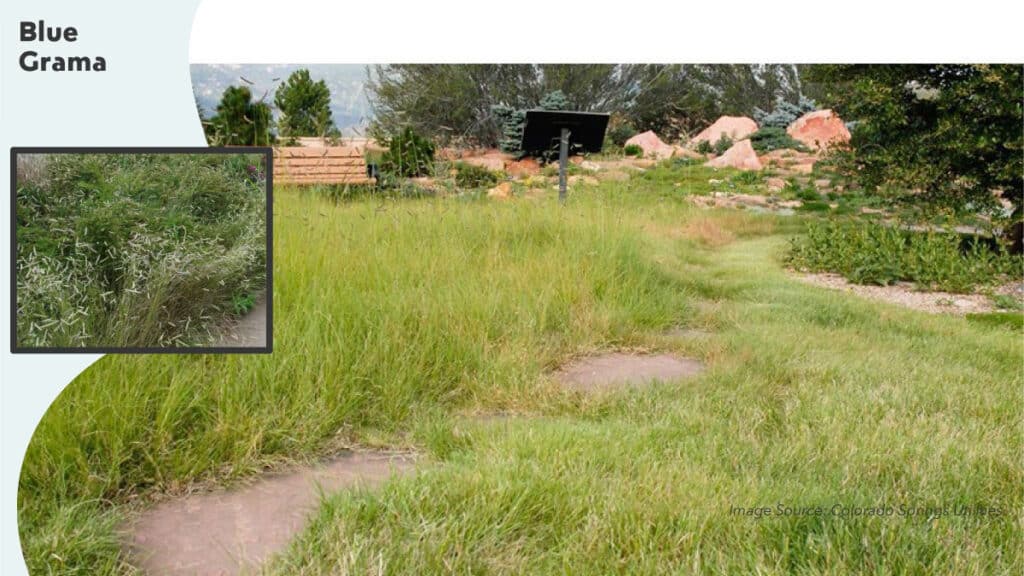
Blue Grama (Bouteloua gracilis)
- Produces distinctive eyelash-shaped seed heads.
- Extremely drought tolerant.
- Adds texture and movement to natural landscapes.
- Short, may not need to be mowed
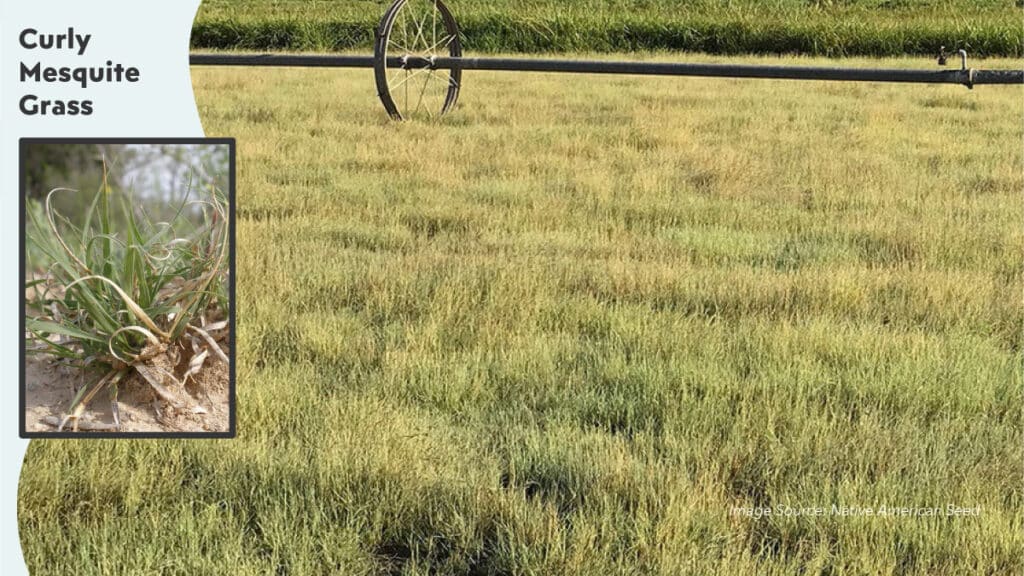
Curly Mesquite (Hilaria belangeri)
- Forms a dense, curly mat of grass.
- Thrives in hot, dry conditions.
- Often used in native grass turf mixes.
Specialty Native Turf Blends
Some companies offer native grass seed mixes designed specifically for Texas landscapes. For example, the Native American Seed Company – headquartered near Junction, Texas with seeds native to our bioregion – produces mixes such as:
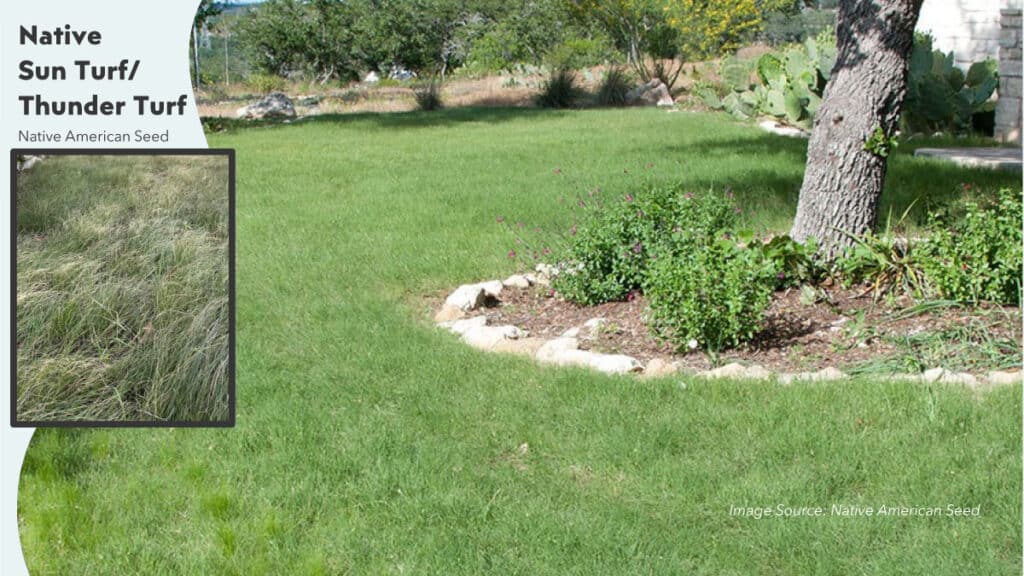
- Native Sun Turf
- Designed for sunny landscapes with lighter foot traffic.
- Thunder Turf
- A more durable blend intended for moderate use areas.
These mixes combine several native grass species to create a lawn-like appearance that requires significantly less water and maintenance than conventional turf.
Adaptive Ground Cover Plants
Unlike native plants that have evolved, exist, and are recognized as indigenous to a particular region or ecosystem, adaptive plants are non-native plants that have adapted to the local climate, soil, and environmental conditions without becoming invasive. (Avoid introducing any invasive plants into your environment which are typically characterized by rapid, aggressive growth, high reproduction, and a lack of natural predators.) Adaptive plants that perform well in Central Texas include:
- Trailing/Purple Lantana (Lantana montevidensis)
- Low, trailing, woody shrub that attracts butterflies and pollinators.
- Thrives in sunny, dry conditions.
- For a native variety that is non-trailing, choose Texas Lantana (Lantana urticoides) which has rougher leaves and orange/yellow flowers.
- Avoid the invasive species of Lanata: Common/Largeleaf Lantana (Lantana camara) whichhas pink/yellow, sometimes red/yellow flowers and is considered a top-10 world weed.
- Asian jasmine (Trachelospermum asiaticum)
- A dense evergreen ground cover often used in shaded landscapes.
- Requires minimal mowing or irrigation.
- Heartleaf skullcap (Scutellaria ovata)
- A low-growing plant with delicate purple flowers.
- Performs well in partial shade.
Trailing Plants as Ground Cover
Trailing and vining plants can be effective ground covers, particularly on slopes, embankments, or other areas prone to soil erosion. Their spreading growth habit allows them to cover large areas quickly, while their root systems help stabilize soil and reduce runoff during heavy rains.
Native vines, such as Coral Honeysuckle (Lonicera sempervirens), provide both functional and ecological benefits. This twining vine spreads across the ground when not supported by a trellis and develops a network of roots that helps anchor soil in place. Coral Honeysuckle is well adapted to Central Texas conditions, tolerates heat and periodic drought, and produces tubular red flowers that attract hummingbirds, butterflies, and other pollinators.
Adaptive or non-native trailing plants, such as Star Jasmine (Trachelospermum jasminoides), are also commonly used as ground covers. When planted without vertical support, star jasmine forms a dense, evergreen mat that helps suppress weeds and protect soil from erosion. It performs well in partial shade and offers the added benefit of fragrant white blooms in spring.
In addition to woody vines, herbaceous trailing plants—those with softer, non-woody stems—can also be used to create living ground covers. These plants typically spread by rooting at nodes or by forming low, spreading clumps, which helps bind soil and reduce surface runoff. When used in combination with mulch or other plantings, trailing species can create layered, resilient landscapes that provide both aesthetic appeal and functional erosion control.
Mulch Options: Wood vs. Rock
Once plants are installed, covering exposed soil with mulch helps maintain soil health and conserve moisture.
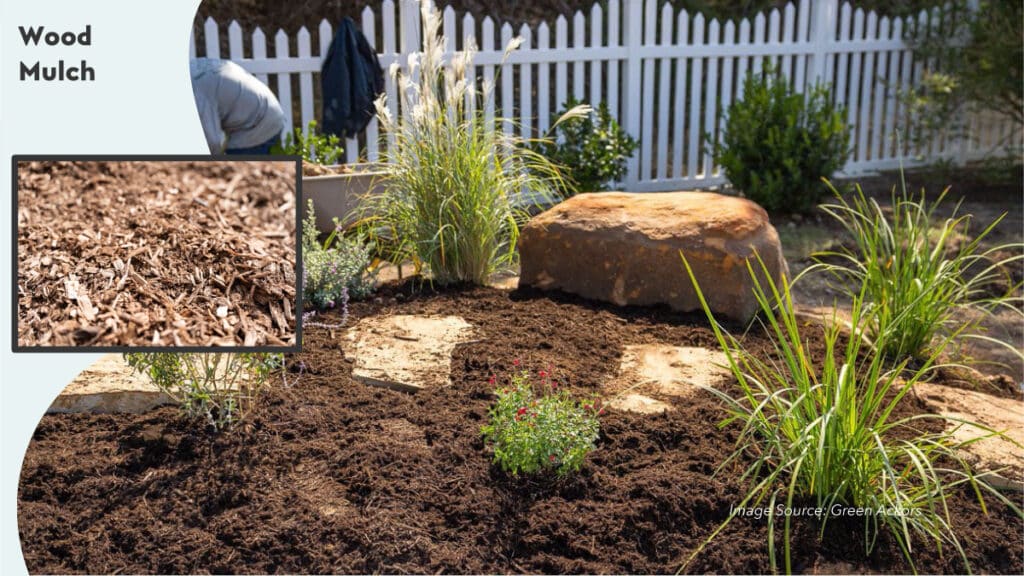
Wood Mulch
Wood mulch offers several benefits for landscapes:
- Decomposes over time, adding nutrients and organic matter to soil
- Reduces soil temperature and evaporation, lowering water needs
- Helps suppress weeds
- Improves soil structure and microbial activity
According to the City of Austin Grow Green program, organic mulch also improves soil health and should be replenished periodically as it decomposes. LCRA offers residents a rebate for replenishing their wood mulch each year.
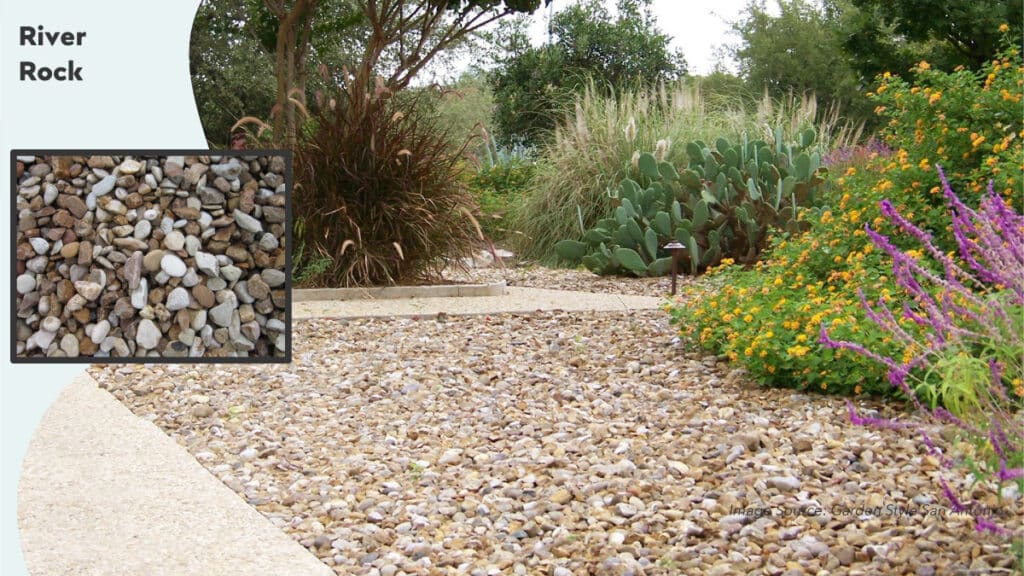
Rock Mulch
Rock mulch is often chosen for its clean, modern appearance and durability. However, homeowners should consider several factors:
- Rocks absorb and radiate heat, raising soil temperatures.
- Higher soil temperatures can increase plant water needs.
- Dust and debris accumulate between rocks, creating conditions where weeds can grow.
- Smaller rocks may wash away during heavy rainfall events.
Artificial Turf Considerations
Artificial turf is sometimes marketed as a low-maintenance alternative to natural lawns, but it can create environmental challenges. Potential concerns include:
- Higher surface temperatures compared to natural vegetation
- Reduced water infiltration into the soil
- Loss of soil microbial activity
- Contribution to urban heat buildup
For these reasons, many sustainable landscaping programs encourage evaluating other options before installing synthetic turf.
Key Considerations When Transitioning Landscapes
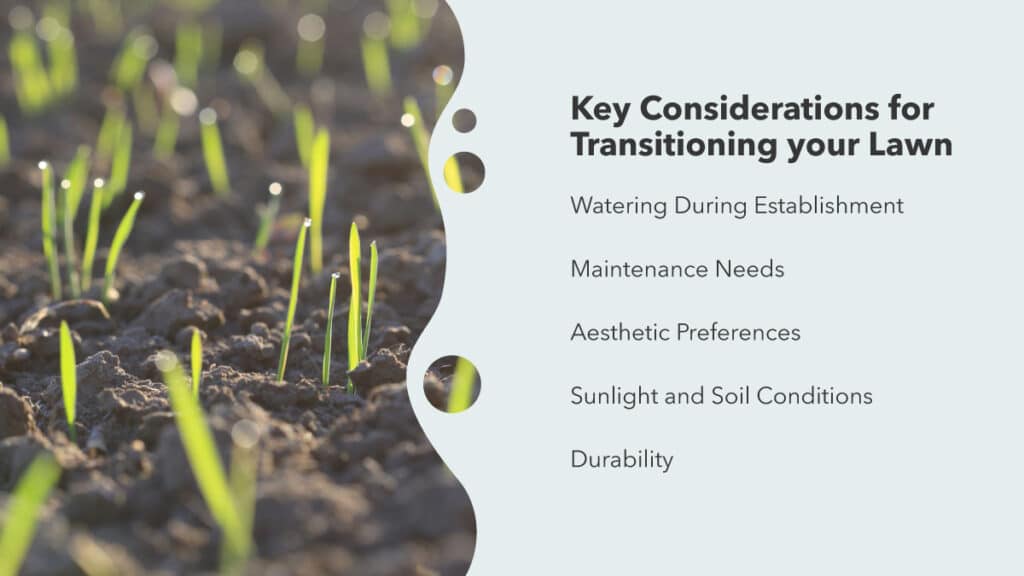
Transitioning from a traditional lawn to alternative ground covers requires planning. Important factors include:
- Establishment period: Native plants require consistent watering during their first growing season.
- Site conditions: Match plants to sunlight exposure, soil depth, and drainage.
- Maintenance expectations: Native landscapes typically require less mowing and fertilizing, but may still need occasional trimming.
- Foot traffic tolerance: Many lawn alternatives handle occasional walking, but not heavy daily use.
Educational programs offered by Texas Master Gardeners and other local organizations often help homeowners learn how to plan and maintain these landscapes successfully.
 You are now being redirected to the WaterSmart page.