
Native Tree Walk at Hamilton Greenbelt
James Green, Green Tree Co.
LMUD Monthly Garden Club guided walk, September 15, 2025
We recently discovered that the Hamilton Greenbelt has over 62 species of native and adaptive trees (some are also invasive)! At this month’s garden club event, James Green of Green Tree Co. took us on a guided walk along the Hamilton Greenbelt to discuss these majestic (and important) specimens.
The ecological importance of native trees
- High value to the ecosystem: A native tree is five times more valuable to the local ecosystem than a non-native one. Native species provide food, shelter, and support for the local wildlife that has co-evolved alongside them.
- Support for local wildlife: All native berry-producing trees are excellent for local animals because they provide food sources that become available when the animals need them.
The risk of non-native and invasive species
- Destructive potential: Invasive trees can outcompete and overtake native plants because they are not adapted to the local climate. They can either perform too well and spread aggressively or not well enough to survive. The non-natives that do not handle our climate well are generally not invasive; they are just a poor choice to plant.
- Spreading into natural spaces: When non-native species spread, they can escape into natural spaces like greenbelts. Because these are more fragile environments, the introduction of invasive species can cause harm to the local ecosystem.
- Impact on the wider community: What you plant in your yard can affect your whole community. Birds and other animals can spread seeds from invasive plants to natural areas far from your property.
Why specialized nurseries are needed
- Availability of native species: Some native species may be harder to grow in a nursery setting, which is why they are not always available at most commercial nurseries.
- Focus on quality: Nurseries that specialize in native species often make these less common varieties available to customers. These specialized nurseries can provide a better source for materials from reputable sources.
How to identify a tree:
Identifying trees is a process of combining multiple clues, including the bark, leaf characteristics, fruit or flowers, and the overall form of the tree. Different features are more useful depending on the season, but by examining several traits, you can make a reliable identification. We suggest the iNaturalist app to help you identify plant species since it takes local region, where the photo was taken, into consideration and allows you to upload multiple photos that the app will then use to give you a more accurate guess on identification.
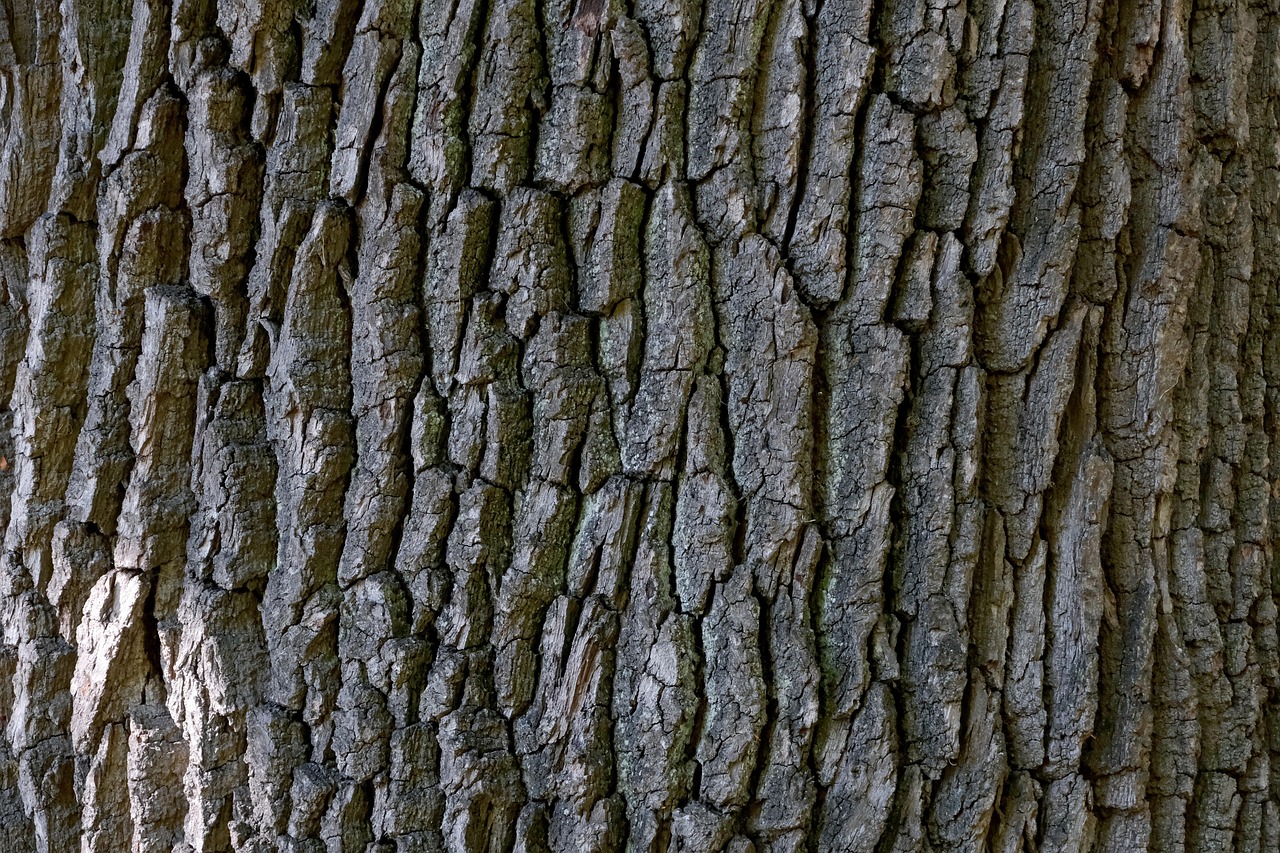
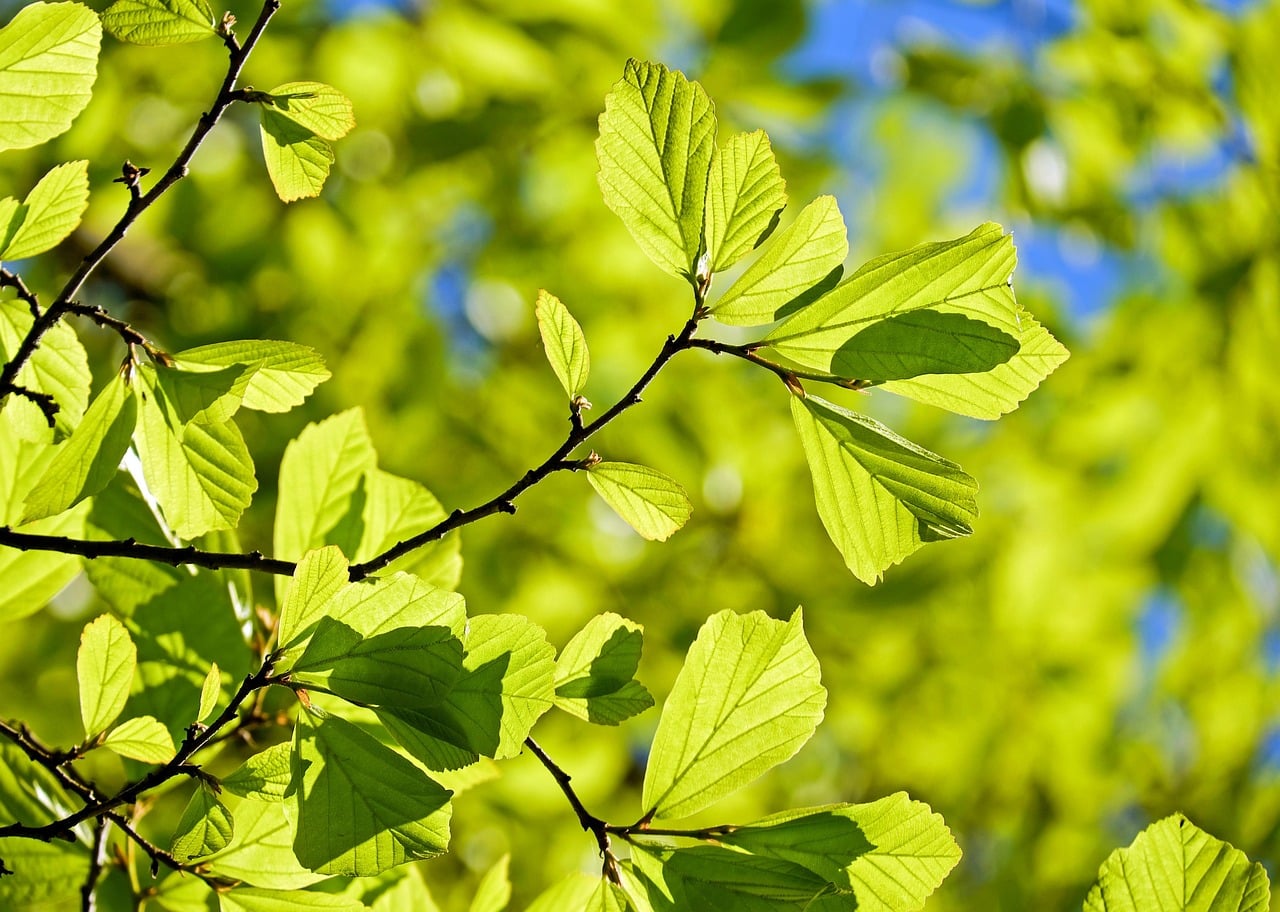
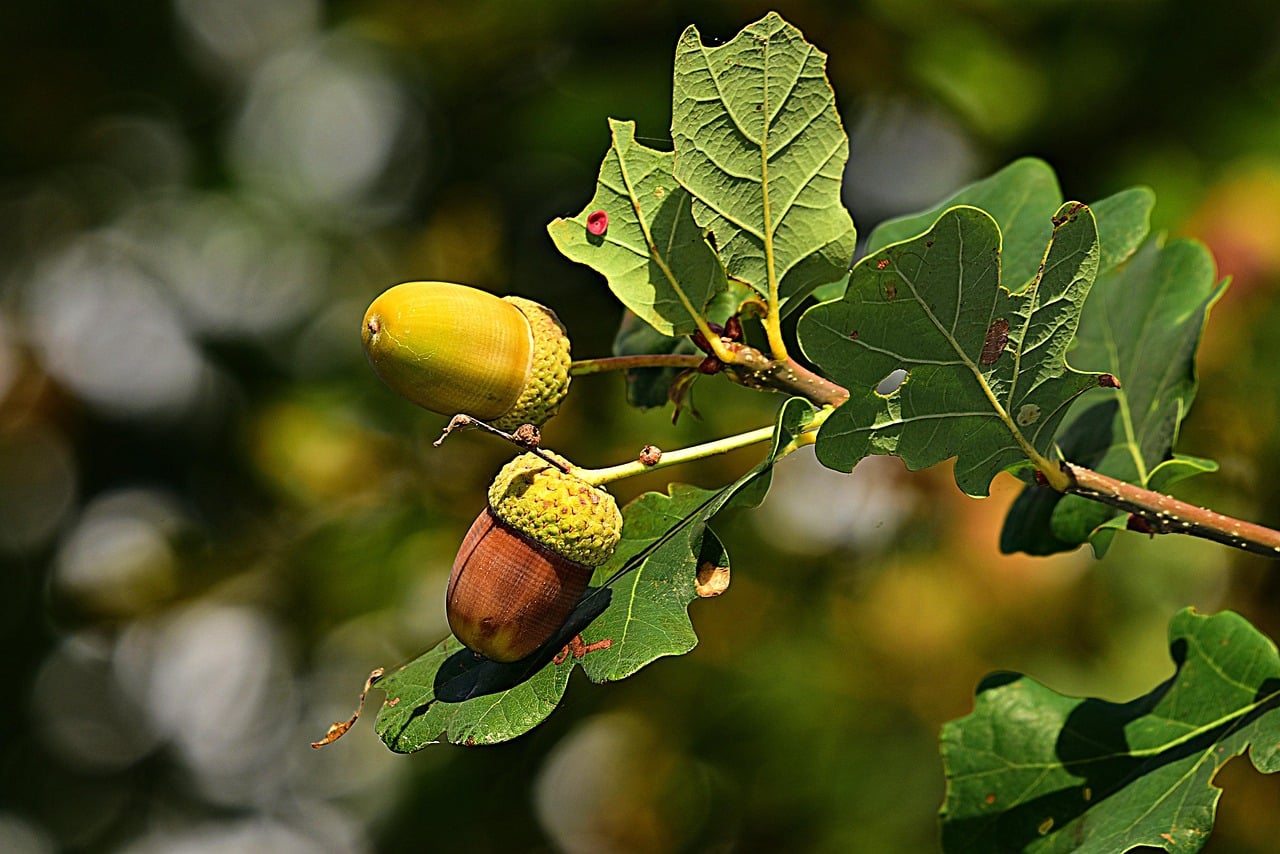
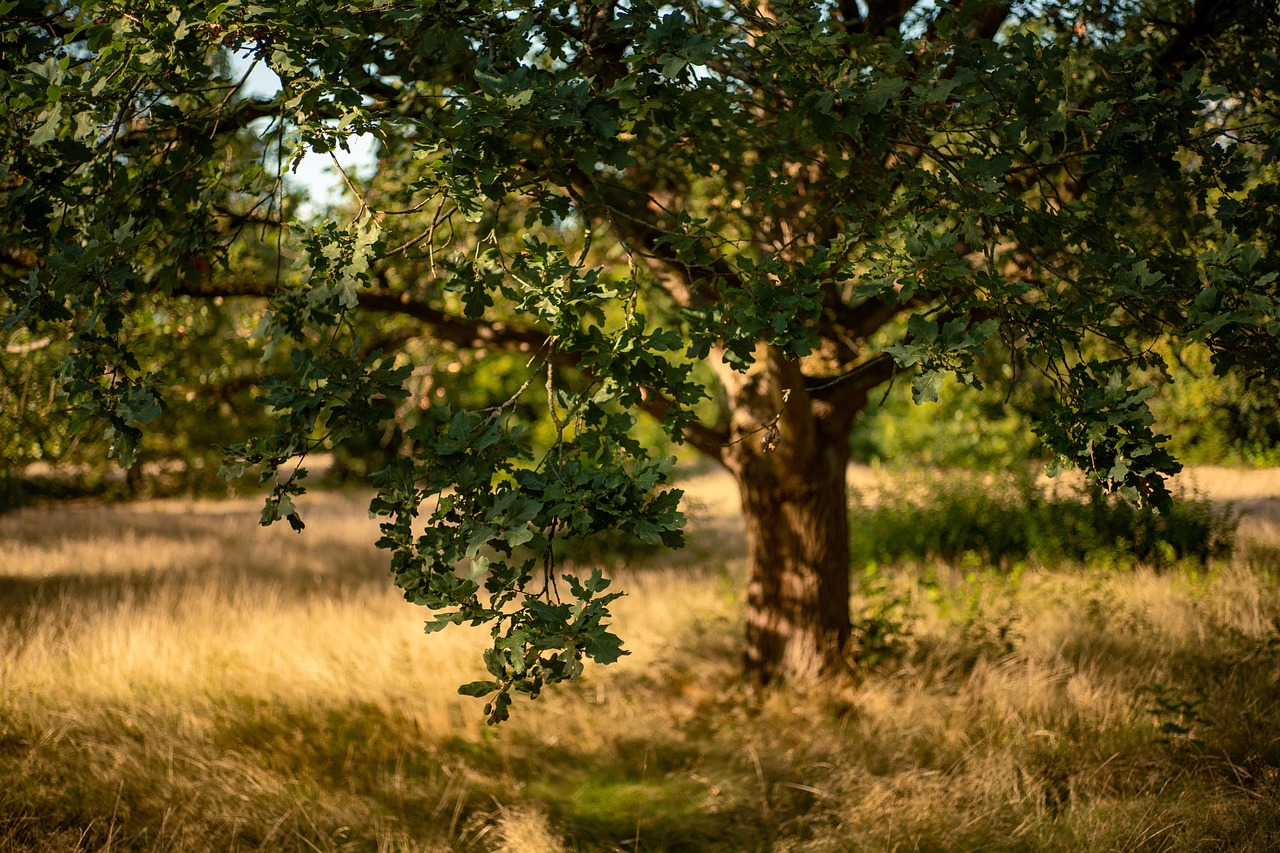
- Bark: A tree’s bark is a permanent clue that can be observed year-round and changes as the tree matures. When looking at bark, note the following characteristics:
- Texture: Is it smooth (beech), papery and peeling (birch), shaggy (shagbark hickory), furrowed (ash), or scaly (black cherry)?
- Pattern: Are the fissures and ridges vertical, or do they create a diamond-shaped pattern?
- Color: The overall color and any unique markings are important. For example, sycamore has distinctive camouflage-like, creamy-white patches.
- Leaf shape and arrangement: While best used in spring and summer, leaves offer a wealth of information for identification. For conifers, you would observe the type and arrangement of needles or scales.
- Leaf complexity:
- Simple: The leaf blade is one continuous unit attached to a single stem, or petiole. Examples include maple, sycamore, and American beautyberry.
- Compound: The leaf is made up of multiple smaller leaflets attached to a central stalk (rachis).
- Pinnately compound: Leaflets are arranged on opposite sides of the central stalk, like a feather. Prairie flameleaf sumac is an example.
- Palmately compound: Leaflets radiate from a central point at the end of the stem, like fingers from a palm.
- How to tell the difference: Always look for the bud. A bud or leaf scar is only present at the base of the leaf’s main petiole, not at the base of each individual leaflet.
- Leaf arrangement
- Alternate: Leaves and buds are staggered along the stem.
- Opposite: Leaves and buds grow directly across from each other in pairs. This is a much less common arrangement than alternate. Maples and ashes are examples of trees with opposite leaves.
- Whorled: Three or more leaves grow from the same point on the stem.
- Other leaf characteristics
- Shape: Look at the overall shape, such as ovate (egg-shaped), cordate (heart-shaped), or lanceolate (lance-shaped).
- Margin (edge): The edges of leaves can be smooth (entire), toothed (serrated), or have rounded or pointed lobes.
- Venation: The pattern of the veins within the leaf blade, which can be either palmate or pinnate.
- Leaf complexity:
- Fruit or flower: The presence of fruit or flowers can be a powerful seasonal identifier.
- Fruit: Fruits, which include seed-bearing structures like berries, nuts, and cones, can offer clear clues. For example, oak trees are easily identified by their acorns. American beautyberry is known for its bright purple berry clusters that encircle the stem.
- Flowers: The color, size, and arrangement of flowers can help pinpoint a species. Note whether male and female flowers are on the same tree or separate.
- Form of the tree: Observing the tree’s overall silhouette, size, and growth pattern can provide important information, especially when identifying trees in the winter.
- Size and shape: The overall shape of the crown, such as conical, rounded, or columnar, can be a distinguishing feature.
- Branching pattern: Some trees have a spreading, open canopy, while others have dense, upright branches.
- Habitat: The tree’s location, whether in a wetland, a forest canopy, or an open field, can narrow down the possibilities.

Common local tree issues:
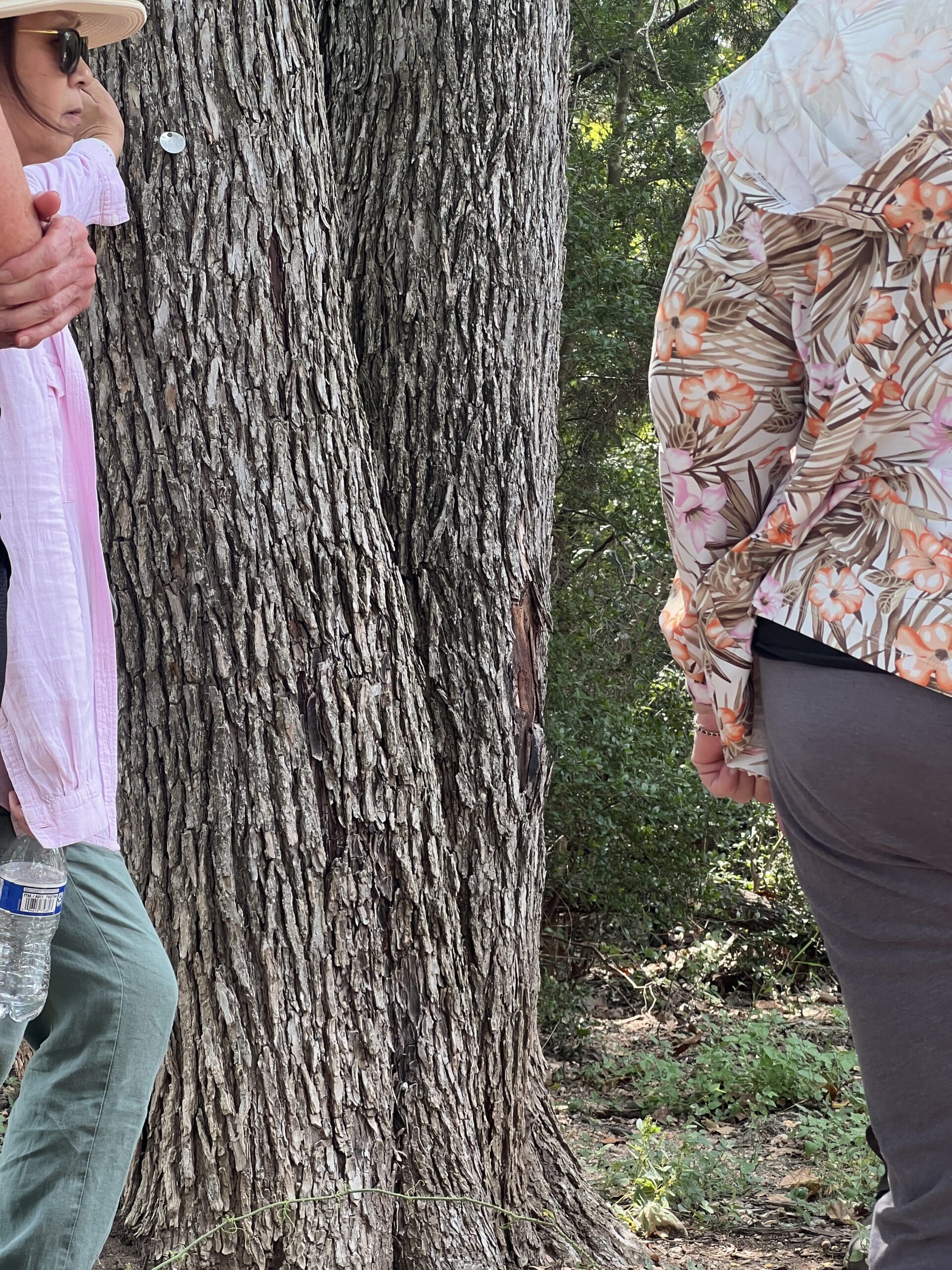
- Multiple Leaders (Codominant Stems): When a tree has two or more trunks growing from the same base, it creates a weak point where the bark doesn’t fully attach, making it susceptible to breakage and decay; this is often called a “codominant stem” and should be addressed by pruning to establish a single leader.
- External Damage: Young trees can be damaged by animals like deer rubbing their antlers against the bark, or by improper handling from humans during landscaping, which can cause significant damage to the protective bark; protecting young trees with cages can help mitigate this issue.
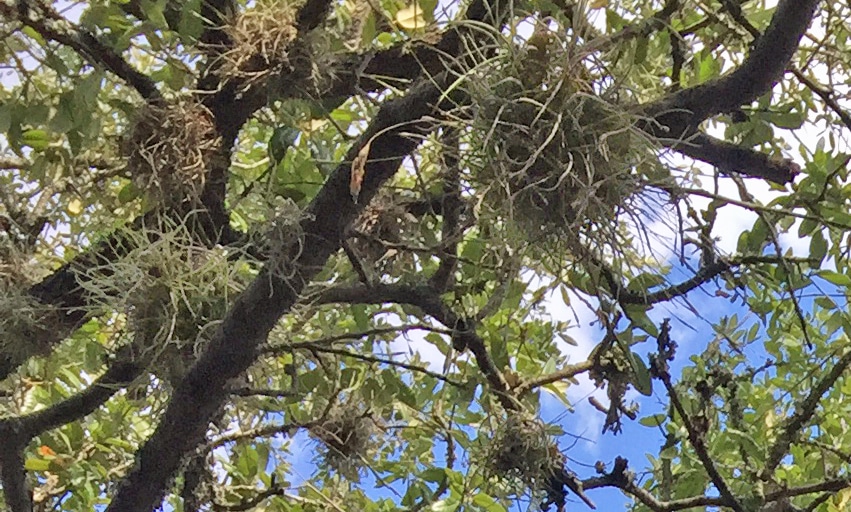
- Ball Moss: While not harmful to the tree itself, excessive ball moss growth can add weight to branches and obstruct sunlight reaching the leaves, potentially impacting photosynthesis.
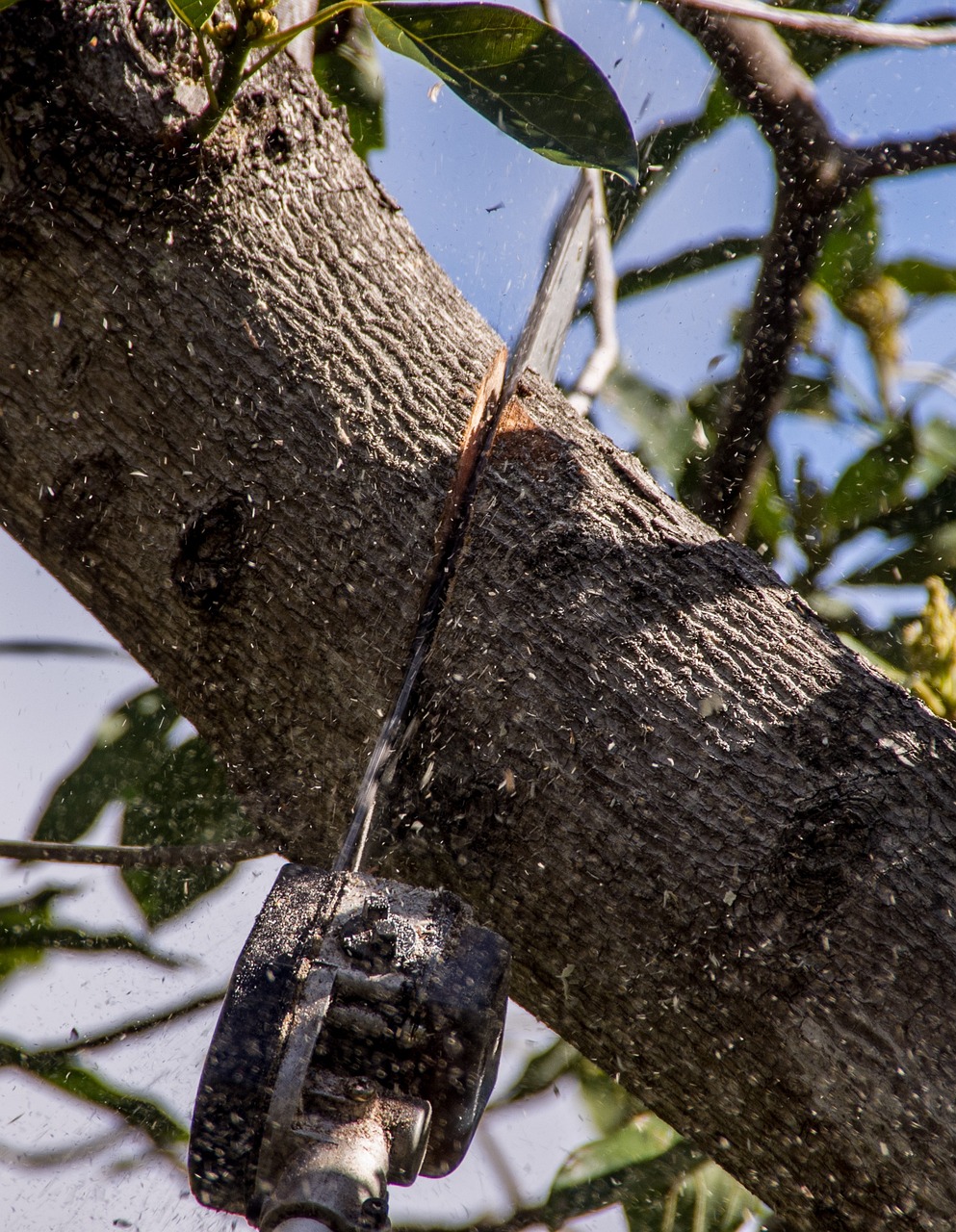
- Unnecessary Pruning: Pruning should only be done when necessary to remove dead wood, prevent the spread of disease, or address structural issues like weak branches; unnecessary pruning can actually weaken the tree by removing healthy branches.
Landscaping Principles:
When choosing what to add to your yard, arborists and horticultural organizations advocate for diversity, proper plant selection, and informed choices over fast growth:
- Diverse landscaping prevents catastrophic loss: Having a variety of plant species in your yard prevents a single pest or disease from wiping out your entire landscape. Diversified gardens that include native grasses and wildflowers attract a wider range of pollinators and beneficial predatory insects, such as ladybugs, that help control pest populations.
- Proper plant selection requires more than just a “native” label: While native plants are generally a great choice, the term itself is not a guarantee of success. A plant must be suited to the specific conditions of your yard. Assess your site: Before choosing plants, you should evaluate the conditions in your landscape, including the amount of sunlight, soil type, and drainage.
- Fast-growing trees are not as stable or sturdy: Fast-growing trees often have weaker wood and are shorter-lived compared to slower-growing, more durable species. The Bradford Pear tree is a prime example of a failed landscaping choice. This fast-growing, non-native tree was once a very popular ornamental; however, its significant problems eventually led to it being despised by experts. Its tight, V-shaped branch structure often causes the tree to split apart in storms, especially as it matures.
Native trees/large shrubs we found on our walk along the Hamilton Greenbelt:
Click on the name of each species to be directed to more information from the Lady Bird Johnson Wildflower Center.
Texas Kidneywood
A fragrant, airy shrub with delicate white blooms that attract pollinators. Often used as a butterfly plant in native landscapes.
- Bloom season: Summer to early fall, with fragrant white flower spikes.
- Wildlife value: A top pollinator plant, especially attractive to butterflies and native bees.
Anacacho Orchid Tree
A small ornamental tree that can reach up to 15 feet tall. Naturally grows in a multi-trunk form but can be pruned into a single trunk. Known for its showy, orchid-like blooms.
- Bloom season: Spring, sometimes again in fall, with white to pale pink orchid-like flowers.
- Wildlife value: Flowers provide nectar for pollinators, especially butterflies.
Live Oak
An iconic Texas tree with broad, spreading branches. Live oaks are moderately susceptible to oak wilt, more so due to their interconnected underground root systems, but remain a cornerstone for local wildlife.
- Bloom season: Catkins appear in spring.
- Wildlife value: Acorns provide food for deer, squirrels, and birds. The dense canopy offers shelter for countless species.
- Note: Moderately susceptible to oak wilt; interconnected root systems increase vulnerability but also resilience.
- Recommended white oaks: Chinkapin and Burr oaks are more resistant to oak wilt, survive freezes well, and provide similar wildlife benefits.
Texas Persimmon
A small, drought-tolerant tree with smooth gray bark on mature trunks. Produces black, edible fruit enjoyed by wildlife and humans alike.
- Bloom season: Spring, with small white to yellow flowers.
- Fruit season: Summer, producing black, edible fruits.
- Wildlife value: Fruits feed birds, raccoons, foxes, and other mammals. Flowers attract pollinators.
Texas Mountain Laurel
A versatile evergreen shrub or small tree that thrives in sun or shade. Famous for its cascading purple flower clusters in spring, which have a grape soda fragrance.
- Bloom season: Early spring, with cascading purple flowers smelling of grape soda.
- Wildlife value: Pollinated by bees; evergreen foliage provides cover for birds and small mammals.
Lindheimer’s Silktassel
A rare, native evergreen shrub that makes an excellent privacy screen or windbreak. Difficult to cultivate, but valuable for native habitat restoration.
- Bloom season: Winter to early spring, with dangling clusters of tassel-like flowers.
- Wildlife value: Evergreen foliage provides nesting cover. Berries support birds.
Mexican Buckeye
A hardy native tree with pink, redbud-like flowers in spring. Produces large, three-lobed seed pods. Tolerates poor soils and drought once established.
- Bloom season: Early spring, with pink-red flowers resembling redbud.
- Fruit season: Summer, with large, glossy seed pods.
- Wildlife value: Nectar for bees and butterflies; seeds eaten by small mammals, though mildly toxic to humans.
Cedar Elm
A medium-to-large shade tree that can live up to 150 years. Not as long-lived as oaks but still dependable, with small leaves that reduce leaf litter cleanup.
- Bloom season: Late summer to fall, unusual among elms.
- Wildlife value: Provides shade and nesting sites. Seeds and leaves feed deer, squirrels, and birds.
Chinkapin Oak
One of the faster-growing oaks, valued for its adaptability and resistance to oak wilt. Provides excellent shade and acorns for wildlife.
- Bloom season: Spring catkins.
- Wildlife value: Acorns are highly nutritious and favored by deer, squirrels, and turkeys. Provides excellent shade and cover.
Bald Cypress
A tall, stately tree that thrives near creeks and rivers. Deciduous in winter, with feathery foliage that turns rusty-orange in fall. Can tolerate both drought and periodic flooding.
- Bloom season: Inconspicuous flowers in spring.
- Wildlife value: Seeds eaten by waterfowl and small mammals. Provides roosting sites for herons and other birds.
Green Ash
A rapid-growing tree that can reach 50–80 feet tall. Prefers moist, well-drained soils and displays golden-yellow foliage in fall.
- Bloom season: Early spring, with small flowers.
- Wildlife value: Seeds feed finches and small mammals; dense canopy provides shade and nesting cover.
Hackberry (sometimes called “Hagberry”)
A controversial tree often disliked for its messy growth near homes, but highly valuable to wildlife. Provides food and shelter almost as important as oaks. Serves as a host for native mistletoe, which in turn supports specialized butterflies.
- Bloom season: Spring, with small greenish flowers.
- Fruit season: Summer into winter, producing small purple drupes.
- Wildlife value: One of the best wildlife trees after oaks—fruits feed birds, while leaves host caterpillars for butterflies such as the Hackberry Emperor.
Yaupon Holly
A native evergreen shrub or small tree with red berries that feed birds. It suckers readily, forming dense thickets, but can also be trained into a single-trunk tree.
- Bloom season: Spring, with small white flowers.
- Fruit season: Fall and winter, with bright red berries.
- Wildlife value: Berries feed many bird species. Evergreen thickets provide cover for small mammals and nesting birds.
American Sycamore
A massive shade tree best suited to low-lying areas near water. Not recommended for planting near homes due to its size and shedding bark. Texas sycamores look different from those in other regions of the U.S.
- Bloom season: Spring.
- Wildlife value: Seeds feed finches and small mammals. Large canopy provides shade and habitat for nesting birds. Best suited for low-lying, moist areas.
Wafer Ash
Also called Hop Tree, this understory species belongs to the citrus family. Its trifoliate leaves resemble true ashes, and its wafer-like fruit was once used as a substitute for hops in brewing.
- Bloom season: Spring, with clusters of small, fragrant flowers.
- Fruit season: Summer, with wafer-like fruits.
- Wildlife value: Host plant for giant swallowtail butterflies. Seeds and fruits support birds and small mammals.
Agarita
A thorny, evergreen shrub with spiny, holly-like leaves. Produces tart red berries in spring and summer, used for jellies, juice, and wine. Provides excellent wildlife cover.
- Bloom season: Late winter to early spring, with fragrant yellow flowers.
- Fruit season: Late spring to summer, with tart red berries.
- Wildlife value: Flowers attract pollinators early in the season; berries feed birds, raccoons, and foxes. Dense, thorny cover protects nesting birds.
Huisache (pronounced wee-satch)
A fast-growing, thorny shrub or small tree up to 25 feet tall. Noted for its fragrant yellow pompom blooms in spring, which attract pollinators.
- Bloom season: Early spring, with fragrant golden-yellow pompom flowers.
- Wildlife value: Flowers attract bees and butterflies; seeds feed birds. Thorny structure provides shelter for small animals.
Invasive trees/large shrubs we found on our walk the Hamilton Greenbelt:
For more information on invasives, visit texasinvasives.org.
- Vitex (Texas Lilac): This popular chaste tree is overutilized in Central Texas because of its beautiful purple blooms, however it exhibits invasive tendencies in Central Texas, out-competing native species and spreading readily through its abundant, fertile seeds. While not on the official invasive or noxious plant lists of the Texas Department of Agriculture or the USDA, its weedy nature and tendency to proliferate in areas like dry creek beds and limestone outcrops are well-documented. Experts and native plant societies advise against planting Vitex to prevent its spread into natural environments where it can displace beneficial native plants.
- Ligustrum (Japanese Privet): an aggressive shrub native to Asia that outcompete native plants for resources. Privets form dense, extensive thickets that choke out native vegetation, degrade wildlife habitat, and are spread rapidly by birds eating and dispersing the seeds. For smaller plants, hand-pulling is the most effective removal method, but it is important to remove all roots to prevent resprouting. Larger plants can be controlled using herbicides through a “cut-stump” or “basal bark” method, which is often recommended for the most effective control.
- Chinese Pistache: often sold by nurseries as a desirable ornamental tree, so it is becoming an invasive problem in Central Texas and other southeastern states. It invades natural areas, including woodlands and ranchlands, displacing native plant life. It’s often confused with the native Texas Soapberry Tree, so be warry when purchasing (if you see red on the leaves, it’s most likely a Chinese Pistache). Girdling (cutting a ring around the trunk) or using herbicides on freshly cut stumps are effective control methods, especially for larger trees.
- Nandina (Heavenly Bamboo): a widely used ornamental shrub, but its invasiveness and berries are a threat to native ecosystems and wildlife. Nandina spreads both by animal-dispersed seeds and underground root sprouts, allowing it to colonize wild woodlands and displace native plants. Its berries contain cyanide compounds that are highly toxic, particularly to birds that consume them in large quantities. This has resulted in mass poisoning events for songbirds like the Cedar Waxwing. To prevent spread and bird toxicity, remove the entire plant, including the roots. If removal is not feasible, at minimum, remove the berries.
 You are now being redirected to the WaterSmart page.