
The Benefits of Building Your Own Rain Garden
Rain gardens utilize stormwater and beautify outdoor space, it’s a win-win! This helpful booklet goes through, step-by-step, how to make one, from picking a location and sizing to building and maintenance.
Pickup this guide and other helpful water-saving literature at the LMUD district office located at 1097 Lohmans Crossing.
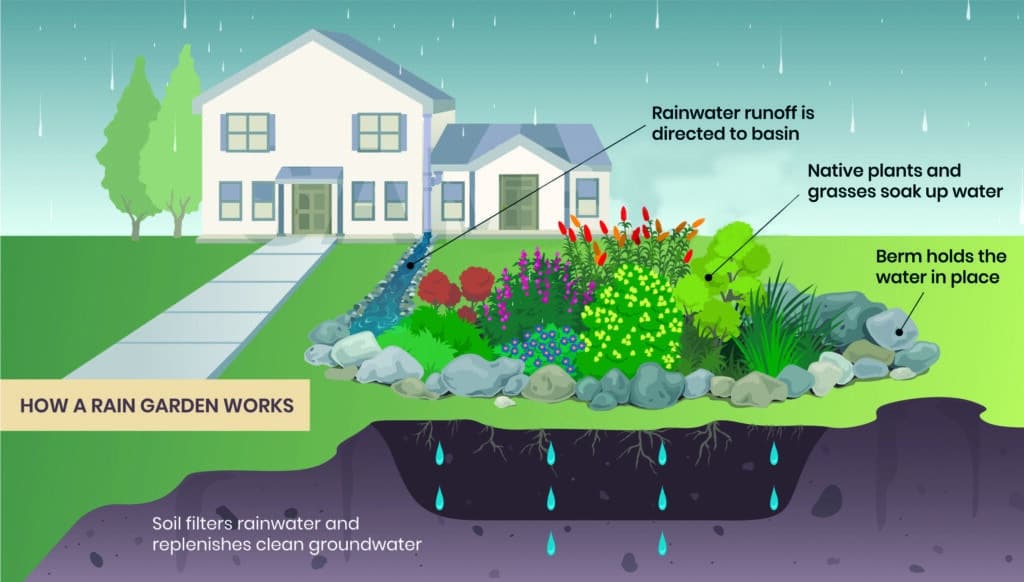
What are rain gardens? Looking out at a garden in front of your home can be a great way to start the day. Rain gardens not only provide the aesthetic appeal of a garden, but also capture and filter stormwater runoff. They can help prevent flooding. They work by absorbing the stormwater that falls on impervious surfaces, such as roofs, driveways, and sidewalks, and giving it a safe place to be absorbed into the ground. Filtering
stormwater prevents pollutants such as oil, pesticides, and sediment from making it to our waterways, protecting the local environment. And preventing still water from collecting elsewhere on a property prevents mosquito infestations. Just to recap: a well-planned garden can help protect against flooding, reduce mosquitos, and protect local
waterways from pollution, all while being a beautiful addition to your home. Rain gardens really are win-win-win-wins!
This booklet includes:
- Picking a location for your rain garden
- Sizing a rain garden
- Building a layered system
- Soil drainage test
- Picking pants and other materials
- Drainage to the rain garden
- Using rocks and barriers to control the flow of water
- Maintaining the rain garden
- Rain gardens in a box
 You are now being redirected to the WaterSmart page.